- Loading...
- Loading...


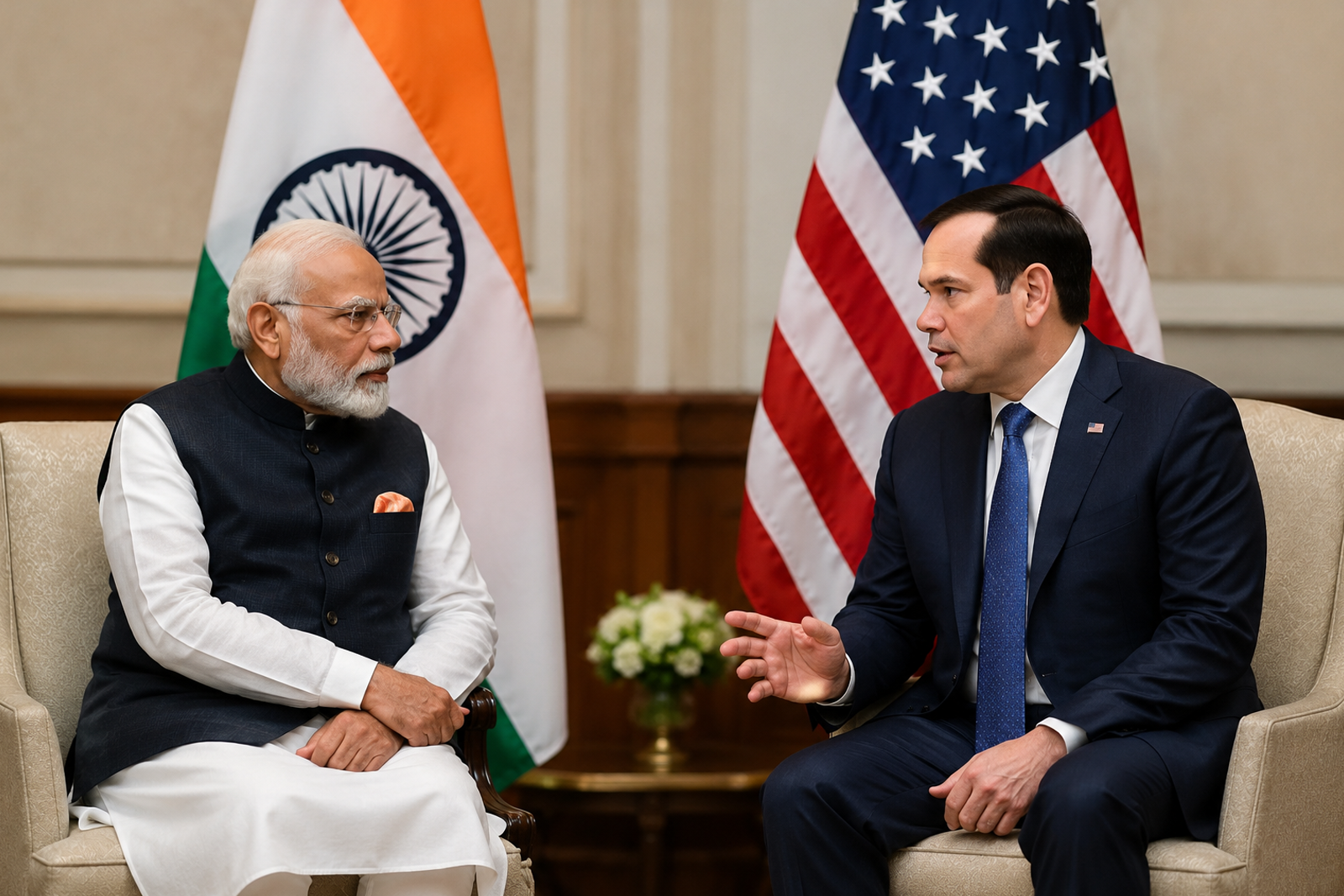
The meeting between Prime Minister Narendra Modi and senior American leader Marco Rubio marked another important step in strengthening the relationship between India and the United States. Held during Rubio’s visit to India, the discussion focused on expanding bilateral cooperation, addressing global security concerns, and reviewing the rapidly changing situation in West Asia.
Both leaders emphasized the importance of maintaining peace and stability in the region, especially as geopolitical tensions continue to rise. India expressed concern over the humanitarian and economic impact of the ongoing crisis in West Asia, while also highlighting the need for diplomatic dialogue and international cooperation. Rubio acknowledged India’s growing role in global affairs and praised the country’s efforts in promoting regional stability.
Apart from international issues, the talks also covered several areas of mutual interest, including defense collaboration, technology partnerships, trade expansion, and energy security. India and the United States have steadily strengthened their partnership over the past few years, with cooperation increasing across sectors such as digital innovation, clean energy, semiconductors, and military coordination.
Prime Minister Modi reiterated India’s commitment to maintaining balanced global relations while working closely with strategic partners like the United States. Rubio, on the other hand, underlined Washington’s interest in deepening engagement with New Delhi, especially in the Indo-Pacific region where both nations share common strategic interests.
Economic cooperation was another major point of discussion. Leaders explored opportunities to increase investments, improve supply chain resilience, and encourage collaboration between businesses from both countries. Analysts believe stronger India-US economic ties could help both nations navigate global market uncertainties and emerging geopolitical challenges.
The meeting also highlighted people-to-people connections, educational partnerships, and cultural exchanges that continue to strengthen the bond between the two democracies.
Political observers view Rubio’s India visit as a sign of Washington’s continued focus on strengthening ties with New Delhi amid shifting global dynamics. With global conflicts and economic uncertainties affecting multiple regions, India and the United States appear committed to expanding strategic cooperation while supporting diplomatic solutions to international crises.
The discussions are expected to pave the way for future engagements between the two nations, reinforcing a partnership that continues to grow in significance on the global stage.
The recent meeting between Prime Minister Narendra Modi and senior American political leader Marco Rubio has drawn significant international attention, highlighting the growing strategic partnership between India and the United States. The high-level interaction focused on strengthening bilateral ties, discussing regional security issues, and addressing the escalating tensions in West Asia.
At a time when global politics is witnessing rapid changes, the meeting reflected the importance both nations place on maintaining close diplomatic engagement. From defense cooperation to trade partnerships and global peace initiatives, the discussions covered a wide range of issues that could shape the future of India-US relations.
India and the United States have steadily developed one of the world’s most important strategic partnerships over the last decade. During the meeting, both leaders reviewed the progress made in several sectors and explored new areas of cooperation.
Prime Minister Modi emphasized India’s commitment to working with democratic allies to ensure peace, stability, and economic growth. Marco Rubio praised India’s rise as a major global power and acknowledged its growing influence in international affairs.
The discussions focused on:
Experts believe the meeting reinforces the shared vision between New Delhi and Washington for a stronger and more stable Indo-Pacific region.
One of the key highlights of the talks was the ongoing crisis in West Asia. The region has been facing rising tensions, political instability, and security concerns that continue to affect global peace and economic stability.
Prime Minister Modi expressed concern over the humanitarian impact of conflicts in the region and stressed the importance of dialogue and peaceful solutions. India also highlighted the need to protect civilian lives and maintain uninterrupted global trade routes.
Marco Rubio echoed similar concerns and discussed the importance of international cooperation in preventing further escalation. Both sides agreed that diplomacy and coordinated global efforts are essential for restoring stability.
The West Asia crisis has major implications for India because:
Because of these factors, India continues to closely monitor developments while maintaining balanced diplomatic relations with all sides.
Defense cooperation has become one of the strongest pillars of India-US relations. During the discussions, both sides reviewed ongoing military partnerships and future defense collaborations.
India and the United States have increased joint military exercises, intelligence sharing, and defense technology cooperation in recent years. The two nations also continue to work together on maritime security in the Indo-Pacific region.
Important areas of defense cooperation include:
India and the US regularly conduct naval, air force, and army exercises to improve coordination and strategic preparedness.
The countries are exploring advanced defense manufacturing partnerships and technology transfers.
Both nations reaffirmed their commitment to fighting terrorism and strengthening intelligence cooperation.
India and the United States continue to support a free, open, and secure Indo-Pacific region.
Analysts say stronger defense ties between the two democracies could play a major role in maintaining regional balance and stability.
Economic collaboration was another major focus during the meeting. India and the United States are among each other’s largest trading partners, with bilateral trade continuing to grow every year.
The leaders discussed ways to:
India has emerged as a major destination for global investment, particularly in sectors like semiconductors, renewable energy, artificial intelligence, and electronics manufacturing.
The US sees India as an important economic partner due to:
Both sides also discussed reducing trade barriers and creating more opportunities for businesses from both countries.
Technology cooperation has become a major driver of India-US relations. During the talks, both leaders highlighted the importance of innovation-led growth and digital partnerships.
Key areas of cooperation include:
India’s rapidly expanding digital economy has attracted significant interest from American companies and investors. At the same time, Indian technology professionals continue to contribute strongly to the US innovation ecosystem.
The partnership in emerging technologies is expected to play a crucial role in shaping future economic growth and global competitiveness.
The India-US discussions included cooperation in traditional energy supplies as well as renewable energy development.
India aims to expand clean energy production while ensuring stable energy access for its growing population. The United States has shown interest in supporting India’s renewable energy ambitions through investment and technology collaboration.
Areas of focus include:
Both nations also acknowledged the importance of maintaining stable global oil markets amid the West Asia crisis.
India has increasingly positioned itself as an independent global player capable of maintaining relations with multiple world powers. During the discussions, Prime Minister Modi highlighted India’s commitment to strategic autonomy and balanced diplomacy.
India’s approach involves:
Global analysts believe India’s balanced foreign policy gives it a unique role in addressing international conflicts and promoting stability.
Marco Rubio’s visit also signals Washington’s recognition of India’s importance in shaping future geopolitical developments.
Beyond politics and economics, India and the United States share strong cultural and educational connections. Millions of Indian-origin people live in the United States, contributing significantly to business, technology, healthcare, and education sectors.
The leaders discussed:
These people-to-people ties continue to strengthen the foundation of the broader strategic partnership.
The meeting between Prime Minister Narendra Modi and Marco Rubio highlighted the growing importance of India-US relations at a critical moment in global politics. As international tensions rise and economic uncertainties continue, both countries appear determined to deepen cooperation across defense, trade, technology, and diplomacy.
The discussions on the West Asia crisis demonstrated shared concerns over regional stability and global peace. At the same time, the talks reinforced the broader strategic partnership between the world’s two largest democracies.
With expanding economic collaboration, stronger security coordination, and increasing technological partnerships, India and the United States are expected to play an increasingly influential role in shaping the future global order.

In today’s world of endless choices and digital noise, marketing is no longer just about promoting products — it’s about creating meaningful connections. Successful brands focus on building relationships rather than chasing transactions. Marketing that connects transforms audiences into loyal communities by earning their trust, understanding their needs, and delivering genuine value. When businesses prioritize people over promotions, marketing becomes more than strategy — it becomes a relationship built to last.
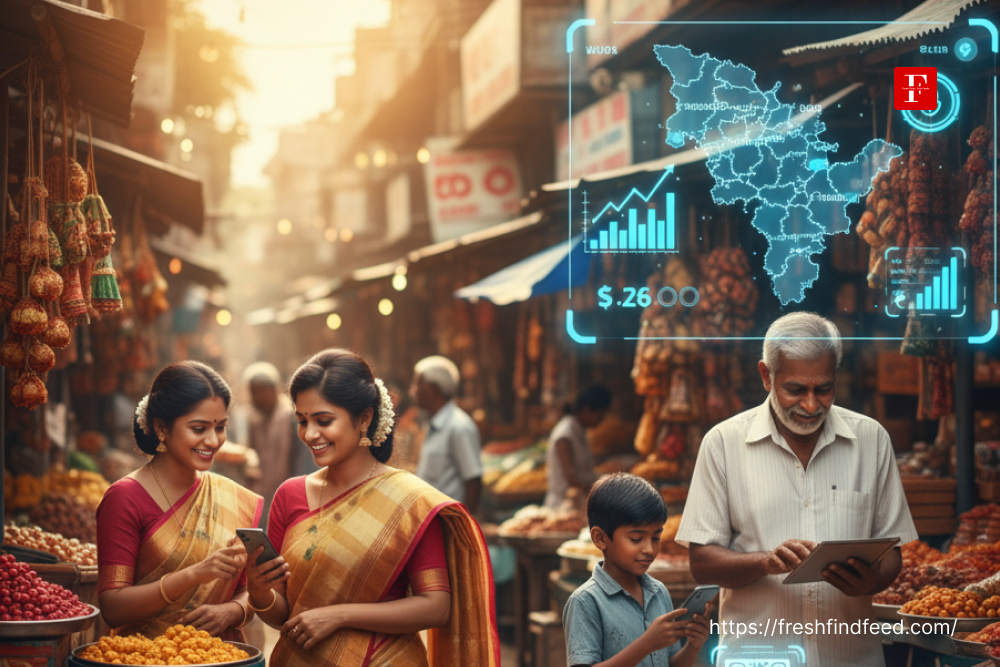
Odisha’s small businesses are entering a new era — where mobile apps, online payments, and e-commerce aren’t luxuries, but lifelines for growth and survival.

As India enters the second phase of its digital revolution, artificial intelligence and automation are not just transforming industries—they’re redefining what it means to work, earn, and adapt.

The conference brought together officials from ten central districts, including district collectors, tehsildars, registrars, and welfare officers, either virtually or in person.

We glorified sleepless nights, burnout, and exhaustion as signs of ambition. But when did working yourself to the edge become the definition of success?

Not everyone who thrives in tech writes code. Some design the very experiences that make technology human.


Leave Comments