Introduction
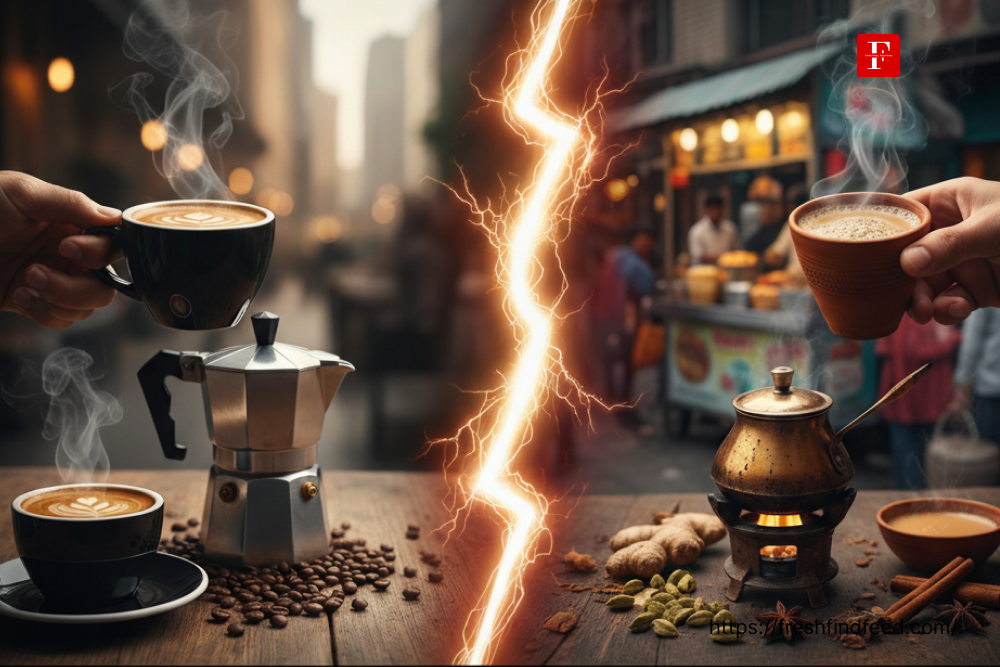
India runs on beverages. From the steaming roadside cutting chai to the Instagrammable cold brew, drinks here are not just about caffeine—they’re about identity, ritual, and culture. But behind the comforting sips lies a brewing battle: coffee vs. chai.
For centuries, chai (tea) reigned supreme in India. It wasn’t just a drink; it was a household staple, a cultural symbol, and even a political tool during independence. But coffee, once a niche drink for South Indians and elite circles, has climbed the popularity charts in recent decades. Cafés, startups, and global chains have rebranded coffee into a lifestyle choice, especially for urban Gen Z and millennials.
So which drink truly rules India’s heart today? And is this even a battle of taste—or of tradition versus modernity?
The Historical Roots
Chai: The People’s Drink
Tea came to India during British colonial rule in the 19th century, when the East India Company cultivated it in Assam and Darjeeling. Over time, Indians made it their own—adding spices, milk, and sugar to create masala chai. Affordable and accessible, chai carts (tapris) sprouted across cities, turning chai into the beverage of the masses.
Coffee: The Southern Heritage
Coffee’s story in India is older but more localized. Legend says a Sufi saint, Baba Budan, smuggled seven coffee beans from Yemen in the 16th century and planted them in Chikmagalur, Karnataka. Coffee flourished in South India, becoming integral to households, where filter coffee remains a morning ritual. For decades, though, it was seen as regional rather than national.
The Rise of Coffee Culture
In the late 1990s and early 2000s, coffee stepped out of South India and into India’s metros with the rise of Café Coffee Day (CCD). Suddenly, coffee wasn’t just a drink—it was a hangout, a date spot, a work corner. Starbucks and other global chains later elevated coffee to aspirational status, selling not just lattes but the lifestyle of cosmopolitan coolness.
Today, coffee startups (Blue Tokai, Third Wave, Sleepy Owl) cater to India’s growing middle class, offering artisanal roasts and cold brews for the Instagram generation. Coffee became less about necessity and more about aesthetic.
Chai’s Timeless Dominance
Yet chai never lost its grip. A cup of chai costs less than ₹10 at a roadside stall, making it deeply democratic. From construction workers to CEOs, chai cuts across classes. Its versatility—ginger chai for colds, masala chai for energy, elaichi chai for comfort—ensures it’s not just a beverage but also medicine, ritual, and bonding tool.
Chai startups like Chai Point, Chaayos, and countless local brands have modernized the humble drink into sleek cafés, ready-to-drink bottles, and office deliveries, proving chai can be trendy too.
Generational Preferences – Gen Z vs Millennials vs Boomers
-
Boomers & Gen X: Grew up on chai. For them, tea is comfort, routine, and tradition.
-
Millennials: Split between chai and coffee, often using coffee for work productivity and chai for social bonding.
-
Gen Z: Driving the cold-brew, iced latte, and boba tea culture. For them, coffee often signals individuality and modern lifestyle, but chai still thrives in hostels, roadside stalls, and meme culture.
This isn’t just a taste war—it’s a generational identity marker.