Introduction
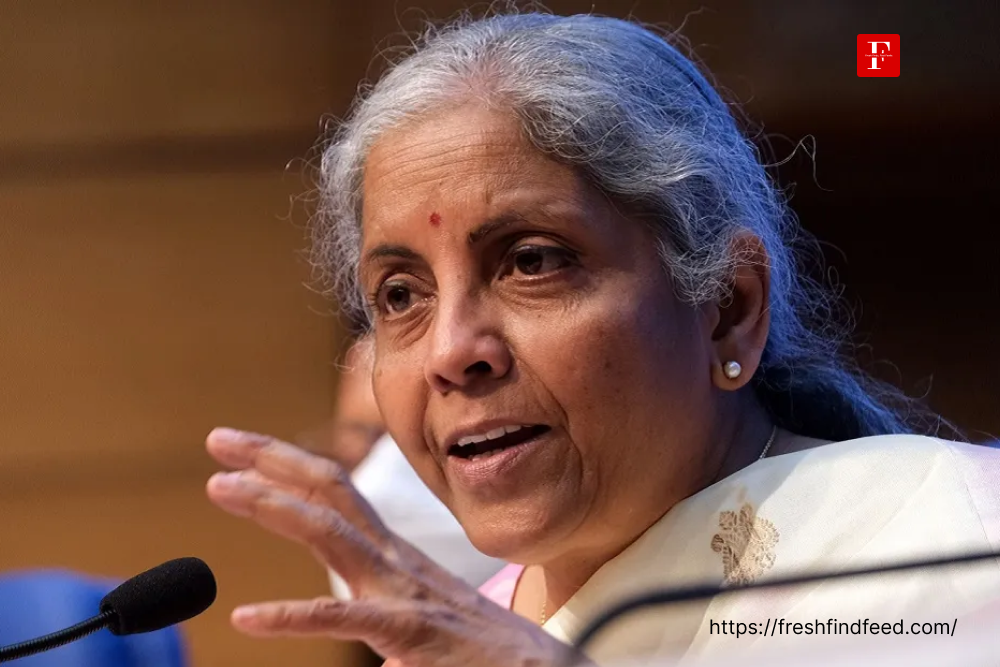
While the world economy battles inflationary pressures, slowing demand, and geopolitical tensions, India’s economic story continues to stand out. Finance Minister Nirmala Sitharaman recently reaffirmed that India’s economy is holding firm despite global headwinds, and that the government will continue its policy of aggressive capital expenditure (capex) to sustain growth momentum.
This push isn’t just about numbers—it’s about reshaping the foundation of India’s future economy, from roads and railways to green energy and digital infrastructure. But can capital spending alone secure resilience in a turbulent global landscape? Let’s unpack.
India’s Economic Performance So Far
India remains one of the fastest-growing major economies in the world, with GDP growth projected between 6–6.5% in FY 2025, even as advanced economies slow down.
Key Strengths Driving the Outlook
-
Domestic Consumption: India’s 1.4 billion population provides a steady demand base.
-
Robust Services Sector: IT, fintech, and digital services continue to attract global clients.
-
Manufacturing Initiatives: Schemes like PLI (Production-Linked Incentive) boost sectors from electronics to EVs.
-
Macro Stability: Controlled inflation (compared to global averages) and strong forex reserves support confidence.
This resilience makes India a “bright spot” in the global economy, as IMF and World Bank reports frequently note.
The Case for Capital Spending
Capital expenditure refers to government spending on infrastructure and assets—things that create long-term economic value.
Sitharaman emphasized that public investment crowds in private investment: when the government builds highways, ports, and power grids, it encourages businesses to expand, creating a multiplier effect.
Why Capital Spending Matters
-
Job Creation: Infrastructure projects generate employment across skill levels.
-
Productivity Boost: Efficient logistics lower business costs.
-
Investor Confidence: Visible public projects assure investors of long-term stability.
-
Future-Readiness: Green energy and digital connectivity prepare India for the next growth era.
Numbers Speak—Rising Capex
The Union Budget has consistently increased allocations for capex over the past few years:
-
FY 2022–23: ₹7.5 lakh crore
-
FY 2023–24: ₹10 lakh crore (a record 33% increase)
-
FY 2024–25: Proposals indicate a further jump, with focus on transport, renewable energy, housing, and rural infrastructure.
The government is consciously shifting from revenue spending (subsidies, consumption-based handouts) to growth-oriented investment.
Challenges in the Global Backdrop
While India’s domestic momentum is strong, external risks remain:
-
Geopolitical Tensions: Conflicts in Europe and West Asia keep energy prices volatile.
-
Global Slowdown: Weak demand in the U.S. and Europe could affect exports.
-
Inflation Pressures: Food price spikes remain a concern.
-
Private Sector Caution: Global uncertainty makes private firms hesitant to match the government’s bold spending.
These headwinds mean India must balance optimism with pragmatism.
Sectoral Impacts of Capex Push
-
Infrastructure & Logistics: Highways, ports, and railways expansion to strengthen India’s position as a supply chain hub.
-
Green Energy: Investments in solar, hydrogen, and EV infrastructure support climate goals and new industries.
-
Digital India: Expanding broadband, 5G, and data centers for a knowledge economy.
-
Urban Development: Affordable housing and smart cities to address rapid urbanization.
-
Rural Connectivity: Better rural roads and irrigation to bridge the urban-rural gap.
The Private Sector Response
Capital spending is not a solo act. For the growth story to sustain, private players must follow suit.
-
Large Indian conglomerates (Adani, Reliance, Tata) are already investing in infrastructure and energy.
-
FDI inflows remain steady, especially in tech and manufacturing.
-
Startups in fintech, agritech, and clean energy stand to benefit from improved infrastructure.
But cautious sentiment lingers due to global volatility and rising borrowing costs.
Long-Term Outlook
India’s bet on capital spending reflects a long-term strategy: build resilience today to reap rewards tomorrow.
-
2025–2030 Vision: Positioning India as a $5 trillion economy.
-
Strategic Advantage: Young workforce + digital innovation + infrastructure expansion.
-
Global Role: As supply chains diversify away from China, India aims to capture a bigger slice of manufacturing and exports.
If executed well, the capital push could transform India into an engine of global growth.
Conclusion
Finance Minister Nirmala Sitharaman’s reaffirmation is more than just an economic statement—it’s a declaration of intent. By doubling down on capital expenditure, India seeks to not just weather global headwinds but to redefine its growth model.
The challenges are real, but so is the opportunity. For a nation that has always found strength in adversity, India’s capital spending drive could be the catalyst that ensures its rise as a leading global power in the decades ahead.