





Tech Nostalgia: Why Gen Z Loves Retro Cameras and Flip Phones Again
Back to the Future: The Retro-Tech Revival
Scroll through TikTok or Instagram today, and you’ll see a curious trend: teenagers snapping photos on chunky digital cameras from 2007, influencers showing off flip phones like fashion statements, and college kids swapping iPhones for Nokias that look straight out of a 2000s music video.
It’s not just an aesthetic. It’s a movement.
Gen Z — the generation born with smartphones and social media — is turning back time. They’re choosing retro gadgets in an age of hyperconnectivity and algorithmic perfection. Whether it’s grainy photos, pixelated screens, or tactile buttons, these “obsolete” devices are suddenly the new badge of authenticity.
But why are digital natives so drawn to analog nostalgia? What’s driving this cultural U-turn from sleek tech to nostalgic gadgets?
Let’s rewind.
The Allure of Imperfection
For Gen Z, perfection has lost its charm. Raised in the era of high-definition cameras and face filters, they’ve grown up seeing flawless, curated content. Every moment — edited, optimized, and algorithmically approved.
Retro tech offers something that’s been missing: imperfection.
The Return of Grain
Old digital cameras like the Canon Powershot or Sony Cyber-shot capture photos with soft hues, blown highlights, and a nostalgic fuzziness that feels real.
It’s not just about the look — it’s about the emotion.
Film-style grain gives photos texture, mood, and memory — everything smartphone photos often lack.
“There’s something human about blur,” says one Gen Z creator. “It makes the photo feel alive.”
The same logic applies to flip phones. Grainy selfies, clunky typing, and slow loading speeds create friction — and that friction is freeing. It slows down the digital rush.
A Rebellion Against the Always-On Era
For all their digital prowess, Gen Z is also the most digitally exhausted generation.
Notifications never stop. Messages demand instant replies. Algorithms dictate moods.
In response, young people are turning to tech that does less.
The Flip Phone Rebellion
Flip phones are now a quiet form of protest. They symbolize digital minimalism — an escape from endless scrolling and anxiety-inducing screens.
Switching to a flip phone isn’t just retro; it’s radical. It’s a way of saying:
“I don’t want my life to be run by a glowing rectangle.”
On social media, the “dumb phone movement” is trending, led by influencers and students who proudly ditch their smartphones for devices that only call and text.
This isn’t about rejecting technology — it’s about redefining our relationship with it.
The Aesthetic of Memory
Nostalgia isn’t just a feeling — it’s an aesthetic.
And no generation understands aesthetics like Gen Z.
Retro gadgets embody a visual identity that today’s sleek devices lack. Think metallic finishes, bold colors, physical buttons, and chunky silhouettes. In a world of identical smartphones, a pink Motorola Razr or a transparent Game Boy screams individuality.
Social media plays a big part. TikTok trends like “2000s digital camera dump” or “Y2K tech haul” rack up millions of views. Young creators recreate the carefree early-2000s vibe — flashes, fuzzy edges, low-resolution joy.
Retro devices aren’t just tools; they’re props in a digital performance of authenticity.
The Psychology of Tech Nostalgia
Why do we romanticize outdated technology?
Psychologists point to two big reasons: comfort and control.
-
Comfort:
Nostalgia acts as an emotional anchor in uncertain times. The analog past feels simpler — no doomscrolling, no algorithms, no chaos. In a world of constant upgrades, old gadgets remind us of slower, softer days. -
Control:
Modern tech often feels overwhelming — data tracking, algorithmic feeds, cloud dependence. Retro tech gives back a sense of agency. You hold your photos. You choose your music. You disconnect when you flip your phone shut.
It’s a subtle rebellion wrapped in sentimentality — a way to find meaning in memory.
The Social Media Effect: A Paradox of Digital Nostalgia
Here’s the irony: Gen Z’s analog obsession thrives because of social media.
TikTok and Instagram are full of filters mimicking film cameras, VHS aesthetics, and ‘90s visual noise. Influencers edit videos to look like old camcorder footage — even though they’re shot on iPhones.
The nostalgia is digitally constructed, but the yearning is real.
It’s not about the past itself — it’s about what the past represents:
Authenticity in a hyper-optimized world.
As one viral TikTok comment put it:
“We want to remember what living offline felt like — even if we never actually did.”
The Cultural Cycle of Retro
Every generation revives the aesthetics of the one before it.
Just as millennials revived vinyl and Polaroids, Gen Z is resurrecting flip phones and digital cameras.
It’s the 20-year nostalgia cycle — a cultural loop where old becomes cool again.
But for Gen Z, the revival is also aesthetic activism: rejecting glossy perfection, craving tactile simplicity, and finding identity in forgotten tech.
Brands are catching on fast.
-
Motorola re-released the Razr with a foldable screen — blending nostalgia with innovation.
-
Kodak and Fujifilm have launched digital cameras that mimic vintage designs.
-
Even Samsung’s Galaxy Z Flip nods to the flip phone era while catering to modern users.
Retro is no longer retro — it’s a design language.
The Rise of “Analog Core”
Welcome to “Analog Core,” the new Gen Z subculture celebrating pre-smartphone tech.
Its core values:
-
Intentional living: Less multitasking, more presence.
-
Aesthetic minimalism: Devices as art, not just function.
-
Emotional connection: Slower, more deliberate moments.
Analog Core isn’t anti-technology — it’s about rediscovering joy in limitations.
Taking 10 photos instead of 1,000. Texting instead of snapping. Living instead of documenting.
Ironically, the movement spreads through the very platforms it critiques — but that’s part of its charm. It’s self-aware, poetic, and slightly contradictory — just like Gen Z itself.
When Vintage Meets Value: The Economics of Nostalgia
The retro tech boom isn’t just cultural — it’s economic.
On resale platforms like eBay, Depop, and Etsy, vintage digital cameras are selling for double or triple their old prices. Flip phones that once cost ₹3,000 now go for ₹10,000 or more.
Influencer culture fuels the demand — when a creator posts a “digital camera dump,” entire models sell out overnight.
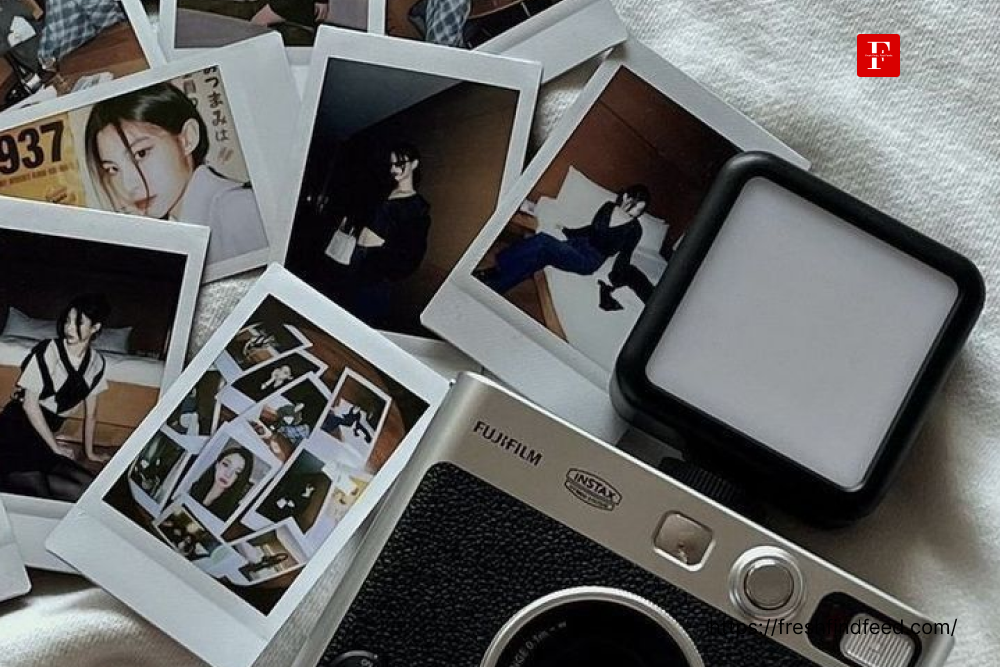
Brands are profiting too. Fujifilm’s Instax cameras and Kodak’s disposable series are booming among Gen Z buyers who crave tangible memories in a disposable world.
Nostalgia, it turns out, is a powerful currency.
Tech Detox, But Make It Fashion
Switching to retro devices isn’t just about aesthetics — it’s a mental health movement disguised as a trend.
Gen Z’s mental wellness awareness has skyrocketed. They’re seeking ways to unplug, reduce anxiety, and escape the dopamine loop of endless notifications. Flip phones offer that escape — but stylishly.
Carrying a flip phone or a vintage camera has become a statement of boundaries:
“I’m online when I choose to be.”
In a way, it’s the modern version of mindfulness — turning away from screens by embracing older ones.
Memory, Media, and Meaning
Every technology carries memories. The devices we use become emotional artifacts — they hold traces of our lives.
For millennials, it was the iPod. For Gen Z, it might be the yellow Sony Cyber-shot or the pink Razr that reappears in a viral TikTok.
Retro tech isn’t about functionality anymore — it’s about meaning.
Each click, grain, or mechanical sound triggers nostalgia, even for those who never lived in that era.
In reviving old tech, Gen Z is not just reclaiming a vintage look — they’re reclaiming authentic experience in an algorithmic age.
Will the Trend Last?
Like most digital trends, nostalgia waves tend to fade — but this one feels deeper. It taps into universal human needs: control, simplicity, and belonging.
We may not all go back to flip phones, but the mindset behind the movement will shape the future of tech.
Expect more devices with:
-
Minimalist interfaces.
-
Physical feedback (buttons, haptics, sliders).
-
Slower, mindful design principles.
The next generation of innovation might just look — and feel — like the past.
The Irony of Progress
In chasing the future, technology often loops back to the past.
AI brings us digital nostalgia filters. Smart TVs play VHS-style movies. Modern cars mimic analog dashboards.
Maybe the lesson here isn’t about rejecting innovation — but about redefining it.
True progress might not mean faster, sleeker, or smarter.
It might mean tech that helps us feel more — not just do more.
As Gen Z reminds us through their grainy selfies and pixelated smiles:
“Sometimes, the future needs a little bit of the past.”


You Might Also Like
-
The Decade That Shapes Your Financial Destiny Your 20s are confusing enough — you’re balancing career dreams, social pressures, and...
-
When most people think of technology in education, online classes and Zoom lectures probably come to mind. But the reality is far broader—and...


Suggested Video