






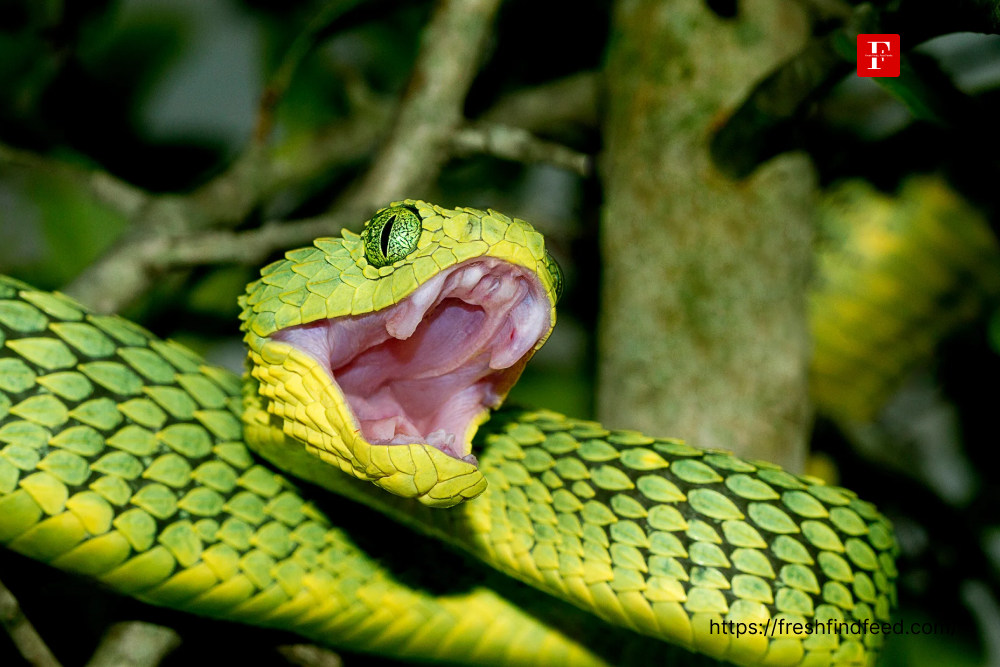
India’s Most Venomous Snakes Could Become More Dangerous Due to Climate Change
Introduction: When the Climate Warms, the Fangs Come Out
Climate change isn’t only about floods, droughts, or disappearing species—it’s also reshaping the behavior of those that survive. Scientists warn that India’s most venomous snakes—including cobras, kraits, and vipers—could soon become more active, aggressive, and widespread as rising temperatures and erratic rainfall alter their habitats and hunting patterns.
In other words, global warming may not just make summers unbearable—it could also make the ground beneath your feet a little more dangerous.
The Deadly Four: India’s Most Venomous Snakes
India is home to more than 60 venomous snake species, but four stand out as the deadliest—the so-called “Big Four” responsible for the majority of fatal bites:
-
🐍 Indian Cobra (Naja naja) – iconic hood, fast-striking, highly adaptable.
-
🐍 Common Krait (Bungarus caeruleus) – nocturnal and elusive, its bite is often painless but deadly.
-
🐍 Russell’s Viper (Daboia russelii) – aggressive when provoked; found in agricultural fields.
-
🐍 Saw-scaled Viper (Echis carinatus) – small but ferocious, infamous for its rapid, sizzling warning sound.
Traditionally, these snakes are concentrated in warmer, tropical, and semi-arid zones, but with temperatures climbing and rainfall patterns shifting, their territory maps are changing fast.
Climate Change: The New Catalyst for Snake Behavior
Rising temperatures and changing rainfall patterns influence snake physiology, reproduction, and movement. Here’s how:
-
🌡️ Temperature Sensitivity: Snakes are cold-blooded, meaning their body temperature and metabolism depend on the environment. Warmer conditions can boost activity, feeding, and breeding cycles, leading to more frequent human encounters.
-
🌧️ Flooding & Habitat Displacement: Erratic monsoons and floods drive snakes from their natural habitats into human settlements—especially during heavy rains.
-
🌾 Expanding Range: Areas that were once too cold or dry for certain snake species are now becoming suitable habitats, expanding risk zones northward and into high-altitude regions.
Scientists note that Russell’s vipers, for instance, have been spotted in regions previously considered snake-free—an early sign of habitat migration triggered by climate change.
When Ecology and Urbanization Collide
Urban sprawl and agricultural expansion have already blurred the boundaries between wild and human zones. With climate change intensifying this overlap, snakes are adapting in alarming ways:
-
Seeking shelter in debris, homes, and vehicles during extreme heat.
-
Hunting rodents in growing urban areas, drawn by waste and food sources.
-
Shifting nocturnal behavior, staying active for longer as nights warm.
In some cases, krait bites—once common only in rural villages—are now being reported on the outskirts of cities like Pune, Bengaluru, and Bhubaneswar.
The Science of Venom: More Heat, More Potency?
Emerging studies suggest that temperature fluctuations can alter venom composition in some species. Warmer climates may influence the toxicity, enzyme activity, and yield of snake venom, potentially making bites even more dangerous.
A 2024 study in Toxicon found that tropical vipers exposed to sustained heat stress produced venom with higher neurotoxic activity. If this pattern holds for India’s “Big Four,” the public health impact could be severe—especially in rural regions with limited access to antivenom.
India’s Snakebite Burden: A Silent Epidemic
India already records the highest number of snakebite deaths in the world—around 58,000 annually, according to The Lancet (2020). Most victims are rural farmers, field workers, and children.
With expanding snake habitats and increased aggressiveness due to climate stress, experts warn of a possible surge in snakebite incidents—particularly in regions where medical facilities and antivenom supplies are inadequate.
States like Bihar, Odisha, Andhra Pradesh, and Uttar Pradesh are projected to become high-risk zones as climate patterns shift.
How Climate Models Predict the Danger Zones
Recent climate mapping projects by the Indian Institute of Science (IISc) and Wildlife Trust of India (WTI) suggest:
-
Eastern India (Odisha, Jharkhand, West Bengal) will see increased snake activity during prolonged monsoon periods.
-
Northern plains (UP, Haryana) could become new breeding zones as winters grow milder.
-
Western Ghats may witness changes in species diversity, potentially introducing new venomous species into human zones.
In short, snakes are not just moving—they’re thriving where they’ve never lived before.
The Human Response: Preparedness and Prevention
To counter the rising risks, experts recommend a multi-layered approach:
-
Data-driven surveillance: Mapping snakebite hotspots with real-time climate data.
-
Community education: Teaching rural populations about snake identification, first aid, and safe farming practices.
-
Strengthening healthcare access: Ensuring availability of antivenom in primary health centers.
-
Wildlife management: Preserving natural habitats to reduce human-snake overlap.
Organizations like the Madras Crocodile Bank Trust and Snakebite Healing and Education Society are already leading awareness drives across rural India.
Beyond Fear: Understanding the Ecological Role of Snakes
While headlines often focus on danger, snakes remain vital to ecosystems—controlling rodent populations, maintaining balance, and even contributing to medical research (venom-derived drugs are used in hypertension and cancer treatments).
The goal isn’t to fear them—it’s to adapt alongside them. Climate change is rewriting the rules of coexistence, and learning to respect these creatures’ new boundaries will be crucial for survival on both sides.
Conclusion: Coexisting in a Warming World
As climate change redraws India’s ecological maps, the line between wild and human territory continues to blur. Snakes, once feared and admired from afar, are becoming unintended messengers of how drastically our environment is shifting.
The next time you hear a hiss or spot a slither in your backyard, remember—it’s not the snake that’s changing, but the world around it. And if we don’t act soon, nature’s warnings might come with fangs.


You Might Also Like
-
Centre Urges Responsible LPG Use Amid Supply Concerns The central government has issued an advisory urging citizens to use Liquefied Petroleum ...
-
Indian LPG Carrier Safely Crosses Strait of Hormuz, Easing Supply Concerns An Indian liquefied petroleum gas (LPG) carrier has successfully cro...

Suggested Video