





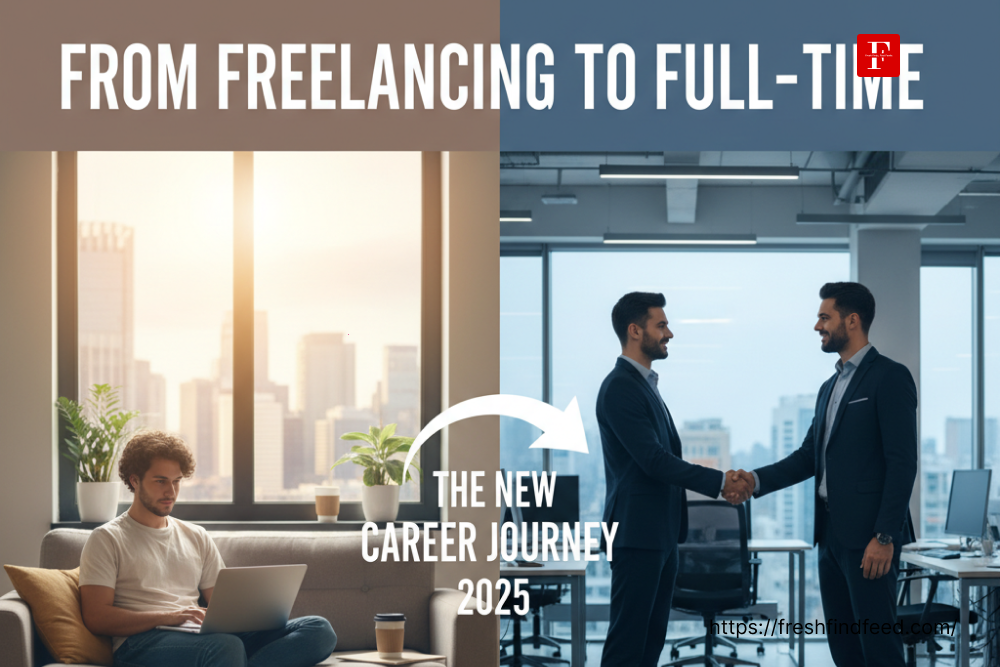
From Freelancing to Full-Time: The New Career Journey in 2025
Once upon a time, careers were linear. You studied, got a job, climbed the ladder, and retired with a pension and a gold watch. But in 2025, that script is obsolete.
Welcome to the blended career era — where freelancing, remote work, and full-time roles are no longer opposites, but parts of a single evolving journey.
For millions of professionals, the path to stability now starts with independence. Freelancers are building portfolios, brands, and networks that eventually lead them into full-time opportunities — or better yet, hybrid models where they retain autonomy and income security.
The once-rigid walls between “freelancer” and “employee” are dissolving. In their place stands the multi-hyphenate worker — adaptable, creative, and unafraid to reinvent.
The Freelance Explosion — How We Got Here
The freelance boom didn’t happen overnight. It’s the result of technology, mindset shifts, and global disruption.
💻 1. The Digital Democratization
Platforms like Upwork, Fiverr, Toptal, and LinkedIn gave skilled professionals direct access to global clients. You no longer needed an office to work — just Wi-Fi and skill.
🌍 2. The Pandemic Catalyst
COVID-19 normalized remote work, showing companies that productivity wasn’t tied to cubicles. Millions discovered freelancing as a lifeline during layoffs — and many never went back.
🕊️ 3. The Autonomy Appeal
Freelancing promised freedom: to choose projects, control schedules, and work from anywhere. For Gen Z and millennials, work-life balance wasn’t a dream — it was a demand.
By 2025, over 53% of India’s working professionals have freelanced in some capacity, according to Payoneer’s 2024 survey. Globally, freelancers make up nearly 40% of the active workforce.
Why Freelancing Became the New Resume
In the modern economy, your portfolio often says more than your degree or job title.
Freelancing has turned into the ultimate skill incubator — a space where professionals learn adaptability, client management, and innovation firsthand.
🧭 1. Proof of Initiative
Freelancers are self-starters. They find clients, pitch ideas, and deliver results. For employers, that signals drive — the kind you can’t teach in classrooms.
⚙️ 2. Diverse Skill Exposure
From marketing to design to coding, freelancers work across industries and clients, sharpening multidisciplinary skills that traditional roles rarely offer.
💬 3. Building a Personal Brand
Each gig, testimonial, and case study builds an individual’s brand equity. In 2025, your reputation is your résumé — and freelancing is the fastest way to build one.
Employers today are hiring not just for what you’ve done, but how you think. Freelancing proves both.
The Hybrid Worker — Blurring the Boundaries
The biggest shift of 2025 is not freelancing itself — but how it merges with traditional employment.
Companies are realizing that freelancers bring fresh perspectives and flexibility that full-time teams often lack. As a result, a new model has emerged:
The “Freelance-to-Full-Time” Pipeline
-
Trial Projects: Companies hire freelancers for short-term collaborations.
-
Culture Fit: The best performers are offered long-term contracts or roles.
-
Hybrid Stability: Many retain freelance flexibility while enjoying full-time benefits.
This model benefits both sides — freelancers gain steady income; companies get proven talent without risky hires.
The “Fluid Workforce”
Tech firms, creative agencies, and start-ups now maintain a blend of employees and contract professionals, optimizing for agility.
According to Deloitte’s Future Workforce Report (2025), 68% of global companies plan to expand flexible talent models within the next two years.
In short, the future isn’t freelance versus full-time. It’s freelance to full-time — and back again.
Why Employers Are Embracing Freelancers
Employers once viewed freelancers as outsiders. Today, they’re strategic assets.
1. Cost Efficiency
Hiring freelancers for project-based tasks saves overhead costs — no benefits, no long-term liabilities.
2. Agility in Innovation
Freelancers often bring cutting-edge ideas and trends from diverse industries. Their fresh outlook helps established companies innovate faster.
3. Talent Scarcity Solution
As industries face skill shortages (especially in AI, digital marketing, UX, and data science), freelancers fill critical gaps instantly.
4. Global Reach
With remote collaboration tools like Slack, Asana, and Zoom, geography no longer limits hiring. The best designer for a Mumbai brand could easily be working from Lisbon.
Freelancers have evolved from stop-gap resources to core creative partners in business growth.
The Changing Psychology of Work
Beyond economics, the shift is deeply psychological.
Today’s professionals crave meaning, autonomy, and flexibility — values the traditional 9-to-5 rarely offered.
1. Freedom as a Career Value
A Deloitte Millennial Survey found that 67% of Gen Z workers would trade salary for flexibility. For them, freelancing isn’t rebellion — it’s realism.
2. Redefining Success
Success is no longer measured by titles or tenure, but by impact and independence. A portfolio that reflects creativity and purpose often matters more than a corner office.
3. The Balance Revolution
Post-pandemic burnout made workers prioritize well-being. Freelancing lets them design their ideal lifestyle — work hard, but live better.
In 2025, the new question isn’t “Where do you work?” but “How do you work best?”
The Tools Powering the Freelance-to-Full-Time Evolution
Technology is the invisible scaffolding behind this revolution.
1. Platforms and Marketplaces
Sites like Contra, Malt, and Workana have joined Upwork in providing verified, transparent freelance ecosystems. Some even act as recruiters for long-term roles.
2. Fintech for Freelancers
Digital banks such as RazorpayX and Payoneer streamline international payments, taxes, and invoices — reducing admin stress.
3. Collaboration Tools
Cloud-based ecosystems like Notion, Figma, and ClickUp make freelancers part of company workflows without physical presence.
4. AI as a Partner
AI tools now handle repetitive admin work — invoicing, drafting, project tracking — freeing freelancers for creative tasks. Ironically, the same automation threatening traditional jobs is empowering the independent workforce.
The Challenges of the New Workforce
While the freelance-to-full-time journey sounds ideal, it comes with its share of hurdles.
1. Income Insecurity
Freelancers face inconsistent income and delayed payments. While digital contracts are improving, the absence of benefits remains a concern.
2. Legal and Tax Complexities
Navigating multiple clients, jurisdictions, and compliance norms can overwhelm freelancers transitioning to structured employment.
3. Work-Life Boundaries
Freedom can quickly become overwork. Without clear boundaries, many freelancers risk burnout.
4. Professional Isolation
Freelancers often miss out on team learning, mentorship, and community — things traditional jobs provide.
The future workforce needs hybrid systems that combine freelance freedom with corporate care.
The Employers’ Evolution — Redefining HR
For organizations, hiring freelancers isn’t just a staffing choice — it’s a strategic redesign of how work gets done.
1. From Hierarchies to Networks
Companies are moving from rigid hierarchies to fluid teams — where freelancers plug in for expertise on demand.
2. Relationship-Based Hiring
Long-term partnerships replace transactional gigs. HR departments are evolving into talent relationship managers, nurturing both employees and external creators.
3. Outcome-Focused Evaluation
Freelancers are measured by impact, not attendance. This performance model is now influencing how full-time roles are assessed too.
Essentially, freelancing has changed how we define productivity itself — from hours worked to value created.
The Personal Brand Economy
2025’s professionals aren’t just workers — they’re brands.
Social media, portfolios, and online communities have made visibility as vital as skill.
1. LinkedIn as a Career Stage
LinkedIn now functions like a professional “showcase.” Freelancers who share case studies, insights, and client wins often attract full-time recruiters organically.
2. The Rise of Creator-Employees
Some full-time professionals now maintain personal content brands alongside jobs. Companies no longer discourage this — they encourage it for mutual reach.
3. Community Equals Opportunity
Freelancers who build niche online communities often evolve into consultants, coaches, or even startup founders.
In short, your online presence is your modern résumé — and authenticity is your strongest credential.
The Future — Work as a Fluid Journey
In 2025 and beyond, the very definition of a “career” is changing.
Instead of climbing one ladder, professionals will build multiple bridges — shifting between freelance, full-time, entrepreneurial, and passion-driven projects seamlessly.
Predictions for the Next Decade
-
Hybrid roles will dominate — part-time freelancers with corporate benefits.
-
AI-powered matching will connect freelancers and companies faster than recruiters.
-
Skill-based micro-credentials will replace degrees as proof of expertise.
-
Portfolio-based careers will become mainstream, especially in tech, design, and media.
In essence, the career of tomorrow is not about choosing a path — it’s about designing one that evolves with you.
Conclusion
The old world told you to pick one: freedom or security.
The new world lets you have both.
Freelancing is no longer an in-between phase — it’s a powerful gateway to career evolution. As companies rethink hiring and individuals rethink success, the future belongs to those who can navigate both independence and integration.
Because in 2025, your career isn’t defined by a contract — it’s defined by your creativity, adaptability, and courage to evolve.


You Might Also Like
-
The Tech Career Without Code In an age where “tech career” often means lines of code and complex algorithms, there’s a quiet ...
-
Introduction In 2025, workplaces are more connected than ever. Employees share insights, updates, and achievements on LinkedIn, while the same ...

Suggested Video