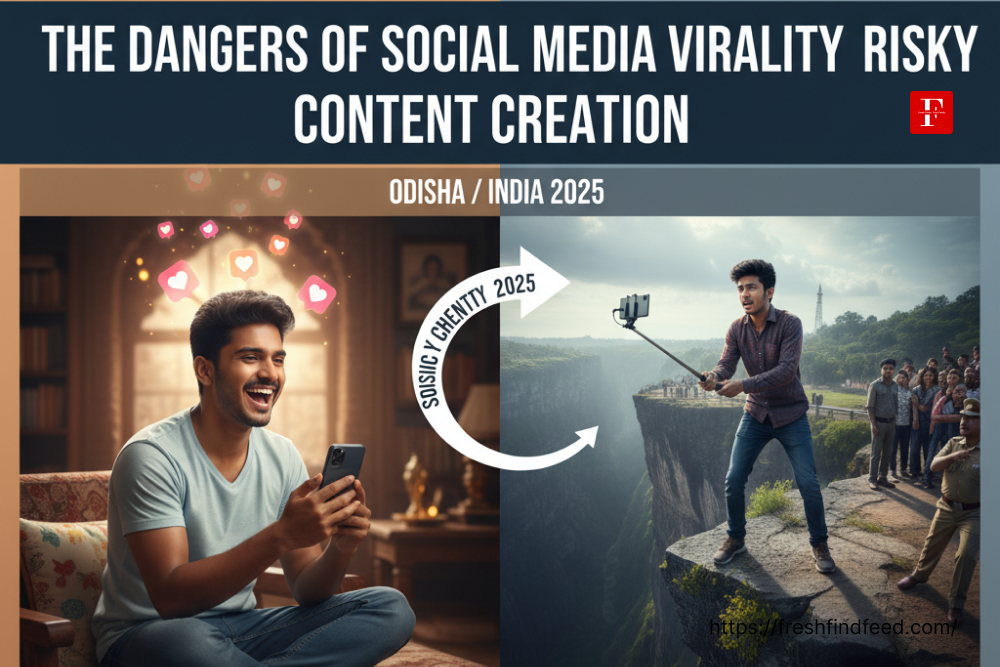
Social media has transformed the way Indians communicate, entertain, and even earn a living. Platforms like Instagram, TikTok (before its ban), YouTube, and X (formerly Twitter) offer instant fame—but there’s a growing downside: risky content creation leading to accidents, legal trouble, and social backlash. Odisha, like other states, has seen its fair share of viral stunts gone wrong, highlighting the urgent need for awareness and regulation.
The Anatomy of Virality
Virality is the dream of every content creator: a single post, video, or reel reaching millions overnight. But the metrics that drive virality—views, shares, and likes—often encourage extreme or dangerous behavior. Examples include:
-
Daredevil stunts: Climbing high structures, jumping from rooftops, or performing water stunts without safety measures.
-
Risky challenges: Viral trends like consuming hazardous items, setting off fireworks indoors, or attempting viral “life hacks” with harmful consequences.
-
Sensational pranks: Harassment, property damage, or public disruption—all in the name of online entertainment.
In Odisha, authorities have reported cases where young creators faced injuries or even fatalities attempting viral challenges. Across India, hospitals increasingly see accidents linked directly to online stunts, from burns and fractures to poisoning.
Why the Problem Persists
Several factors contribute to the rise of risky content creation:
-
Monetization pressure: With brand deals and ad revenue tied to engagement, creators often push boundaries to stay relevant.
-
Peer pressure and trends: Viral challenges spread like wildfire. Missing out can make creators feel invisible.
-
Lack of awareness: Many underestimate the real-life consequences of online stunts.
-
Low regulation: Social media platforms largely rely on user reporting, which is reactive rather than preventive.
Experts say that in a country like India, where over 600 million users are active on social media, even a tiny fraction attempting extreme content can lead to hundreds of incidents annually.
The Legal and Social Consequences
Risky content isn’t just physically dangerous—it can have legal repercussions. Indian law covers offenses such as:
-
Section 269 & 270 IPC: Negligent acts likely to spread infection (relevant for hazardous challenges).
-
Section 336 IPC: Endangering life or personal safety.
-
Section 188 IPC: Disobeying public orders, often invoked when stunts disrupt public spaces.
Additionally, creators face social backlash, cancellation, and mental health stress, as viral failures or accidents can bring criticism, cyberbullying, or even ostracism.
How Odisha and India Are Responding
Odisha’s authorities, along with civil society groups, are increasingly promoting digital safety awareness campaigns, especially among youth. Schools and colleges are incorporating online responsibility modules, while police departments issue warnings against dangerous viral challenges.
Nationally, initiatives like the Ministry of Electronics & IT’s Cybercrime Awareness Programs aim to educate users about the risks of sharing unsafe content. Some social media platforms have also begun removing dangerous challenge content proactively, but experts argue that education and community engagement remain crucial.
Building a Safer Social Media Culture
Experts recommend a multi-pronged approach:
-
Digital literacy education: Teaching youth about online risk and personal responsibility.
-
Parental and community involvement: Encouraging discussions about safe online behavior.
-
Platform accountability: Social media companies must flag hazardous content before it goes viral.
-
Positive content promotion: Rewarding creativity that is entertaining yet safe.
“The thrill of virality should never come at the cost of life or health,” says Dr. Priya Mohanty, a digital safety educator in Bhubaneswar. “We need a culture shift where safe content is valued as much as sensational content.”
The Takeaway
As Odisha and India embrace the digital age, the lure of instant fame must be balanced with responsibility. Virality can be a tool for entertainment, education, and social change—but without caution, it can quickly turn tragic. The challenge ahead is not just policy or policing but creating a culture of safe, mindful online engagement.