






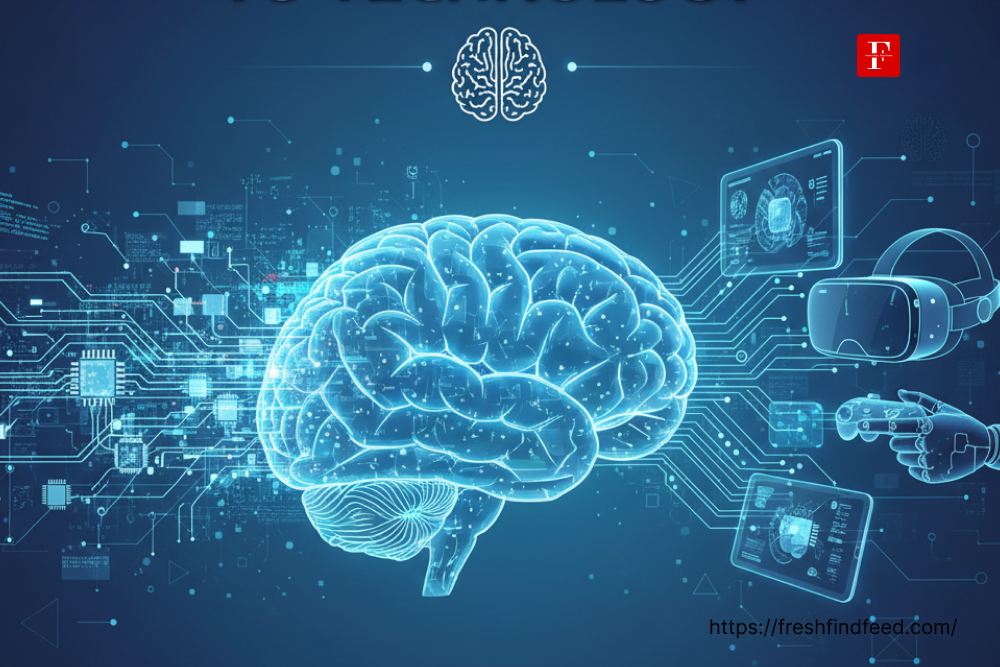
How the Human Brain Adapts to Technology
We live in a world where our phones, smart devices, and AI assistants are practically extensions of our minds. But have you ever wondered what all this technology does to the most complex organ in your body—your brain? From rewiring our neural pathways to reshaping attention spans, the human brain is constantly adapting to keep up with the digital age.
Neuroplasticity: The Brain’s Superpower
The brain isn’t a static organ; it’s dynamic, flexible, and remarkably adaptive. This adaptability is known as neuroplasticity—the ability of neural networks to change through growth, reorganization, and new connections.
-
Example: People who regularly play video games often show enhanced hand-eye coordination and faster reaction times because repeated activity strengthens relevant neural circuits.
-
Fact: London taxi drivers develop a larger hippocampus—the brain region responsible for spatial memory—demonstrating that repeated mental effort can physically reshape the brain.
With technology, our brain is constantly creating shortcuts, optimizing efficiency, and sometimes, unfortunately, trading depth for speed.
Digital Multitasking: Blessing or Curse?
Smartphones, social media, and instant notifications encourage constant multitasking, which affects how our brain processes information.
-
Benefit: Exposure to multiple streams of information can enhance cognitive flexibility—your brain learns to switch tasks quickly.
-
Downside: Studies show that frequent multitasking can reduce attention span and lower memory retention, as the brain struggles to focus on a single task for too long.
Think of your brain as a hyperactive browser tab manager—it’s excellent at juggling tabs, but leaving too many open can slow the system down.
Memory in the Age of Google
We’re outsourcing memory to our devices, relying on search engines, notes apps, and reminders. This is sometimes called the “Google effect” or digital amnesia.
-
Positive: Freeing mental space for problem-solving and creativity.
-
Negative: Decreased ability to memorize facts, as the brain prioritizes retrieval over storage.
Your brain is no longer a database; it’s becoming a retrieval engine. Knowing where to find information is sometimes more important than knowing it by heart.
Technology and Emotional Processing
Social media platforms, messaging apps, and AI interactions impact emotional intelligence and social cognition.
-
Evidence: Constant exposure to curated content can heighten anxiety, envy, or even loneliness, as the brain interprets digital interactions differently than face-to-face cues.
-
Adaptation: The brain learns to process emoji, GIFs, and memes as part of social communication—tiny signals that mimic human emotions.
In essence, we are teaching our brains a new language of feelings—one typed, tapped, or swiped rather than spoken.
5. AI, VR, and Cognitive Expansion
Artificial Intelligence, Virtual Reality, and augmented interfaces are taking brain adaptation to another level.
-
VR Training: Studies show VR can accelerate learning by engaging sensory, spatial, and motor areas simultaneously.
-
AI Assistance: Tools like AI writing assistants and recommendation systems allow the brain to focus on higher-level creativity while leaving routine work to machines.
This partnership between humans and technology is like having a cognitive co-pilot—your brain delegates, adapts, and grows in tandem with intelligent systems.
Challenges and Risks
While the brain is adaptable, over-reliance on technology comes with risks:
-
Reduced Attention Span: The brain prefers instant rewards, making long-form reading and deep focus harder.
-
Sleep Disruption: Blue light and late-night scrolling affect circadian rhythms and memory consolidation.
-
Digital Addiction: Constant notifications trigger dopamine release, creating compulsive behavior patterns.
Balancing tech use with mindfulness, offline experiences, and brain exercises can mitigate these effects.
Practical Tips to Optimize Brain-Tech Interaction
-
Scheduled Tech Breaks: Give your brain time to consolidate memories and recharge.
-
Engage Deeply: Alternate between short bursts of digital multitasking and focused, single-task sessions.
-
Learn Actively: Use technology to learn skills, not just consume content passively.
-
Mindful Social Media Use: Follow positive communities, limit scrolling, and engage meaningfully.
-
Brain Exercises: Meditation, puzzles, reading, and physical activity strengthen neural pathways.
Conclusion
The human brain is not a passive passenger in the digital revolution—it’s an active navigator, constantly adapting, rewiring, and evolving. Technology changes how we think, learn, and feel, but with conscious use, it can amplify our cognitive abilities rather than diminish them. In the end, the brain and technology are partners in a grand experiment, shaping the future of human potential.

You Might Also Like
-
The Reserve Bank of India (RBI) has appointed Sanjay Kumar Hansda and Sonali Sen Gupta as its new Executive Directors (EDs), a key leadership posit...
-
Introduction: When Dreams Become Your Playground Imagine this: You’re flying over mountains, wind in your hair, adrenaline rushing &mdash...


Suggested Video