- Loading...
- Loading...


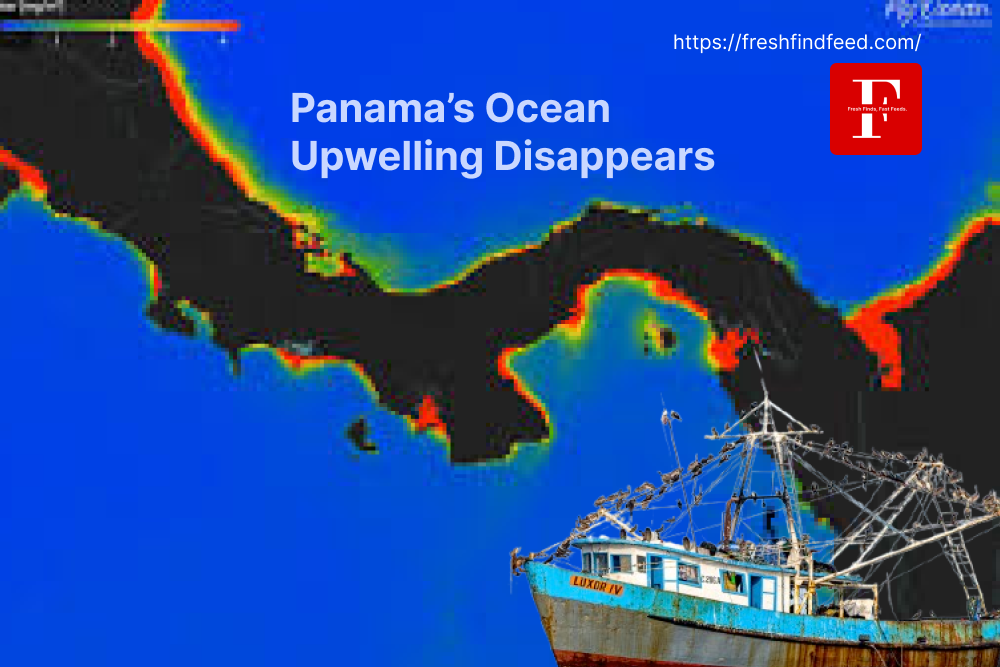
The Ocean’s Hidden Engine
For centuries, Panama’s Pacific coast has benefited from a powerful natural process called upwelling. This phenomenon occurs when strong winds push warm surface water away, allowing cold, nutrient-rich water from the deep sea to rise. These nutrients are like fertilizers for the ocean, fueling the growth of phytoplankton — tiny organisms that form the base of the marine food chain.
Phytoplankton feed zooplankton, which feed small fish, which then sustain bigger species like tuna, dolphins, and seabirds. In short, upwelling is the engine that drives marine productivity. Without it, the ocean becomes less fertile, and the entire food chain begins to weaken.
Did You Know?
What’s Happening in Panama?
Recently, researchers noticed something unusual: Panama’s upwelling has slowed dramatically, and in some areas, it has completely vanished. For a country located near one of the most important marine corridors in the Eastern Pacific, this is no small matter.
Fishermen have already reported catching fewer sardines and anchovies, species directly linked to upwelling productivity. Coral reefs are also under stress, as warmer surface waters and reduced nutrient flow disrupt the delicate balance of marine ecosystems.
This disappearance is not just temporary noise in the climate system — many scientists fear it could signal a long-term shift driven by climate change.
Climate Change and the Vanishing Upwelling
Why is this happening now? Experts point to multiple climate-related factors:
Together, these forces threaten to change Panama’s marine landscape for decades to come.
Why It Matters Beyond Panama
The disappearance of Panama’s upwelling is not just a local issue it carries global consequences.
Can the Damage Be Reversed?
Scientists stress that while natural fluctuations like El Niño may eventually allow upwelling to return, the long-term trend is worrying. To address the problem, researchers suggest:
While Panama cannot single-handedly reverse the global climate crisis, local conservation policies can help buffer its ecosystems against further damage.

A Wake-Up Call from the Ocean
The disappearance of Panama’s upwelling is a stark reminder that climate change is altering Earth’s most fundamental systems. What seems like a distant scientific observation is, in fact, a direct threat to food security, marine biodiversity, and the fight against global warming.
The ocean is telling us something urgent — and it’s up to humanity to listen.

In today’s world of endless choices and digital noise, marketing is no longer just about promoting products — it’s about creating meaningful connections. Successful brands focus on building relationships rather than chasing transactions. Marketing that connects transforms audiences into loyal communities by earning their trust, understanding their needs, and delivering genuine value. When businesses prioritize people over promotions, marketing becomes more than strategy — it becomes a relationship built to last.

Odisha’s small businesses are entering a new era — where mobile apps, online payments, and e-commerce aren’t luxuries, but lifelines for growth and survival.

As India enters the second phase of its digital revolution, artificial intelligence and automation are not just transforming industries—they’re redefining what it means to work, earn, and adapt.

The conference brought together officials from ten central districts, including district collectors, tehsildars, registrars, and welfare officers, either virtually or in person.

We glorified sleepless nights, burnout, and exhaustion as signs of ambition. But when did working yourself to the edge become the definition of success?

Not everyone who thrives in tech writes code. Some design the very experiences that make technology human.






Leave Comments