- Loading...
- Loading...



In an age where “tech career” often means lines of code and complex algorithms, there’s a quiet revolution happening — one that’s turning creativity, empathy, and psychology into the most sought-after skills in the digital world.
Welcome to the world of UI/UX Design — where artistry meets logic, and the bridge between humans and machines is built not with syntax, but with storytelling.
For years, non-coders felt shut out of the booming tech industry. But with the rise of apps, smart devices, and digital products dominating daily life, design has become central to how people interact with technology.
And this shift is creating a new wave of high-demand, high-impact careers that don’t require coding — just curiosity, creativity, and empathy.
UI is about visual interaction — the buttons, colors, icons, layouts, and fonts that shape a user’s journey through a digital space.
Think of it as the architecture and aesthetic of a house — what you see, touch, and feel when you “enter” an app or website.
UX goes deeper. It’s about how it feels to use something — how easily users navigate, how intuitively they find what they need, and how satisfied they feel afterward.
It blends psychology, design thinking, and research to craft meaningful digital experiences.
Together, UI and UX transform functional technology into human-centered design — a key reason why the world’s biggest brands (Apple, Airbnb, Spotify, Swiggy, Zomato) invest heavily in it.
We’ve reached a turning point. Technology has become omnipresent — but usability hasn’t always kept up. Users today demand simplicity, speed, and beauty.
Whether it’s fintech apps, OTT platforms, or healthcare dashboards, every digital interface needs design expertise.
Even government services, NGOs, and startups now hire UI/UX specialists to make their websites accessible and user-friendly.
According to LinkedIn’s Emerging Jobs Report 2025, UI/UX design ranks among the top 10 fastest-growing career fields globally.
UI/UX design attracts individuals from diverse fields — psychology, arts, marketing, architecture, even journalism — because the skills overlap:
Empathy = understanding user needs
Communication = crafting narratives through visuals
Creativity = translating ideas into digital form
This inclusivity makes UI/UX design the new tech gateway for non-technical professionals.
Unlike data science or software engineering, UI/UX doesn’t demand advanced math or coding backgrounds.
Many designers start with bootcamps, online courses, or certifications — learning through hands-on projects rather than theory.
It’s a perfect crossroad for people who love creativity but still want to be in the tech ecosystem.
You get to design screens that millions interact with — bringing an artist’s touch to digital innovation.
UI/UX roles exist across industries — from tech giants and startups to e-commerce, healthcare, and education.
You can work in-house, freelance, or remote, making it one of the most adaptable digital careers.
With companies competing for attention and retention, good design is no longer optional — it’s strategic.
Average UI/UX designer salaries in India range from ₹6–15 LPA, with senior roles crossing ₹25 LPA+, depending on experience and location.
Globally, UX leads and product designers earn $80,000–$120,000+ annually.
A common misconception is that designers “just make things look good.” In truth, UI/UX is a deeply analytical process rooted in user psychology.
Conducting user research and surveys
Creating personas and journey maps
Designing wireframes and prototypes
Conducting usability testing to refine experiences
Designing visual layouts, typography, and color systems
Creating interactive components and responsive layouts
Ensuring accessibility for all users
UI/UX designers work closely with developers, marketers, and product managers. They translate business goals into user-friendly experiences, ensuring products are both functional and delightful.
You don’t need a tech degree to become a designer — but you do need tools and curiosity.
Figma (industry standard for collaborative design)
Adobe XD, Sketch, Canva (for UI mockups)
Miro or Whimsical (for brainstorming and flow mapping)
Notion, Maze, or Hotjar (for research and feedback)
Empathy – Understanding users’ frustrations and goals
Critical Thinking – Solving usability issues creatively
Communication – Articulating design decisions clearly
Adaptability – Learning from feedback, trends, and data
Start small: take a UI/UX foundation course (Google UX Certificate, Coursera, Interaction Design Foundation).
Then build a portfolio — your visual resume — showcasing design case studies and prototypes.
What separates good design from great design is empathy — the ability to feel what users feel.
UI/UX designers study human behavior, perception, and habits. They rely on:
Color psychology (why blue feels trustworthy or red urgent)
Cognitive load theory (how much info a brain can process)
Gestalt principles (how people naturally group visual elements)
Every swipe, click, or scroll is the result of understanding how humans think — not how machines operate.
Many graphic designers upskill in UI/UX to move from static visuals to interactive design. Their aesthetic sense gives them an edge.
Their understanding of human behavior is invaluable for user research and persona creation.
They bring storytelling and clarity to content design — a rising UX specialization focused on microcopy, tone, and user flow language.
Their analytical mindset helps balance aesthetics with conversion goals — making them ideal for product design or UX strategy roles.
UI/UX is evolving beyond apps and websites. The future belongs to experience design across mediums — AR, VR, wearables, smart homes, and even cars.
Designers now work on voice user interfaces (VUI) for Alexa, Siri, and chatbots — crafting tone and emotion for digital personalities.
With AR and VR, designers create 3D interactions — designing not just buttons, but whole environments.
The new wave of designers are focusing on accessibility, sustainability, and bias-free interfaces — making tech more humane.
Generative AI tools like Uizard, Galileo, and Figma AI are changing how prototypes are built.
But rather than replacing designers, AI amplifies their creativity — automating repetitive tasks while humans focus on strategy and emotion.
According to a McKinsey Design Index, companies that prioritize design outperform industry benchmarks by 32% in revenue growth and 56% in shareholder returns.
A well-researched design saves money by minimizing product failures and rework.
When users have seamless, enjoyable experiences, they stay — and they recommend. Great design is the new word-of-mouth marketing.
UI/UX design isn’t a single role — it’s an ecosystem of specialized positions:
UI Designer – Focuses on visuals, color systems, and layouts
UX Designer/Researcher – Studies users, pain points, and interactions
Product Designer – Oversees end-to-end product experience
Interaction Designer – Focuses on animations and micro-interactions
UX Writer/Content Designer – Crafts words that guide users
Design Strategist – Aligns design with business goals
With experience, one can grow into roles like Design Lead, Creative Director, or Chief Experience Officer (CXO) — titles that barely existed a decade ago.
The global design industry is expected to reach $250 billion by 2027, driven by digital transformation.
Countries like the U.S., UK, and Germany are witnessing an annual 20% job growth in UX design.
India’s tech ecosystem — led by Bengaluru, Pune, Hyderabad, and Bhubaneswar — is seeing a surge in UI/UX hiring.
Startups, edtech, fintech, and e-commerce companies are actively recruiting designers to improve customer experience.
Institutes like NID, IDC, Pearl Academy, and NIFT now offer dedicated UX programs. Online platforms like DesignBoat, Coursera, and GrowthSchool are democratizing learning.
Subjectivity: Design decisions are often debated and need strong reasoning.
Feedback Overload: Balancing user input and business goals can be tricky.
Rapid Trends: Tools, preferences, and patterns evolve constantly.
Portfolio Pressure: Recruiters judge by projects, not degrees — so showcasing real-world work is key.
Yet, for those who thrive in change and creativity, these challenges are fuel, not friction.
The world is moving toward experience-driven technology — not just what works, but what feels right.
That’s why companies today invest as much in design teams as they do in developers.
By 2030, demand for UI/UX professionals in India alone is projected to grow by over 40%, according to NASSCOM.
Simply put, design has become the language of digital empathy, and those who can speak it fluently — coders or not — will define the next decade of innovation.
UI/UX design isn’t just a career — it’s a philosophy. It’s about understanding humans as much as understanding screens.
In a world where every click matters, designers hold the power to make technology not just functional, but meaningful.
So if you’re a dreamer, communicator, or visual thinker who’s ever felt left out of the tech boom — this is your moment.
You don’t need to code to change the digital world. You just need to design how it feels.

In today’s world of endless choices and digital noise, marketing is no longer just about promoting products — it’s about creating meaningful connections. Successful brands focus on building relationships rather than chasing transactions. Marketing that connects transforms audiences into loyal communities by earning their trust, understanding their needs, and delivering genuine value. When businesses prioritize people over promotions, marketing becomes more than strategy — it becomes a relationship built to last.
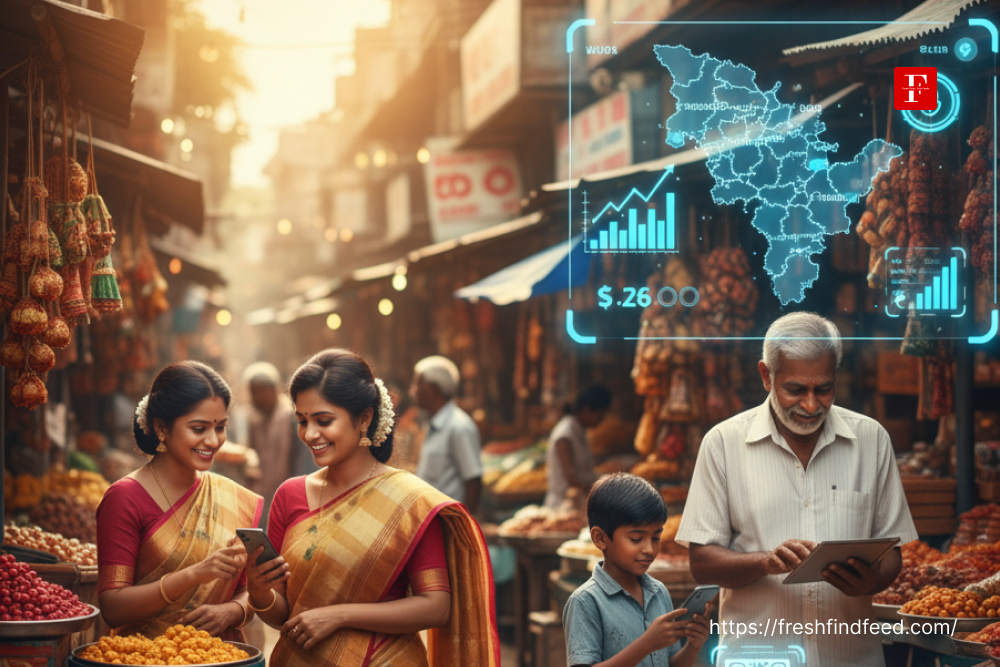
Odisha’s small businesses are entering a new era — where mobile apps, online payments, and e-commerce aren’t luxuries, but lifelines for growth and survival.

As India enters the second phase of its digital revolution, artificial intelligence and automation are not just transforming industries—they’re redefining what it means to work, earn, and adapt.

The conference brought together officials from ten central districts, including district collectors, tehsildars, registrars, and welfare officers, either virtually or in person.

We glorified sleepless nights, burnout, and exhaustion as signs of ambition. But when did working yourself to the edge become the definition of success?








Leave Comments