- Loading...
- Loading...


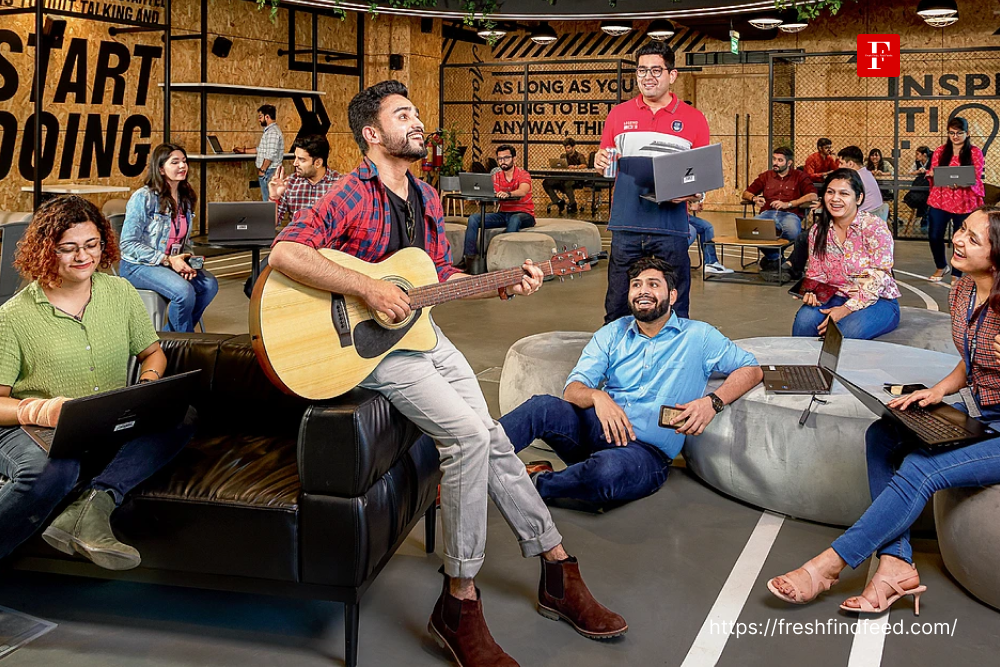
The Indian workplace is in the middle of a quiet revolution.
Once defined by strict hierarchies, cubicles, and unquestioned authority, offices today are transforming into flexible, hybrid, and emotionally open ecosystems.
At the heart of this change is Gen Z — a generation raised on the internet, social media, and global exposure. They value autonomy over authority, impact over income, and mental well-being over material rewards.
But their entry into a traditionally hierarchical Indian work culture hasn’t been smooth. For many organizations, this clash of values is forcing a deep rethinking of what “work culture” even means.
Before the digital era, the ideal employee was one who:
Came early, stayed late
Followed orders without question
Respected hierarchy and seniority
Rarely discussed personal struggles or mental health
Work was duty. The boss was authority. The company was family — but only on paper.
For Gen Z, the equation flips entirely.
They are:
Digitally native and globally informed
Values-driven and socially conscious
Loyal to purpose, not necessarily to employers
Open about mental health and boundaries
They ask questions older generations never dared to — “Why are we doing this?” or “Is this worth my mental health?”
This generational contrast is shaking up Indian workplaces like never before.
In traditional Indian offices, hierarchy is sacred. Seniority commands respect — sometimes unquestioningly.
Gen Z, on the other hand, prefers horizontal structures — where everyone’s voice matters.
Older managers often perceive Gen Z as “too casual” or “too outspoken,” while Gen Z views rigid hierarchies as outdated and creatively stifling.
“I don’t want to just follow; I want to understand why,” says Aanya, a 25-year-old designer from Pune.
This mindset is pushing companies to flatten hierarchies — adopting open-door leadership, peer-based feedback, and transparent communication systems.
Progressive Indian firms like Zoho, Swiggy, and Zerodha are reimagining work structures to prioritize collaboration over control.
The new mantra? Respect is earned, not enforced.
For decades, “hard work” in India meant long hours, weekend calls, and personal sacrifice.
Success stories glorified 12-hour days and “grind culture.”
Gen Z has rejected the romanticism of burnout.
They prioritize:
Work-life harmony
Flexible hours
Remote work options
Mental health breaks
And they’re not afraid to walk away if denied these.
A 2024 LinkedIn survey found that 73% of Indian Gen Z professionals would choose a healthier work-life balance over a higher paycheck.
This signals a fundamental shift from survival to sustainability in professional life.
In the old workplace, communication was formal and top-down — memos, meetings, and mail chains.
Today’s Gen Z prefers Slack pings, emojis, and instant feedback loops.
Older colleagues may see this casual tone as unprofessional, while Gen Z finds traditional formality stifling.
Companies are finding middle ground:
Using digital tools (Slack, Notion, Teams)
Encouraging async communication
Prioritizing clarity over corporate jargon
The shift isn’t just linguistic — it’s cultural.
It represents a move from fear-based communication to psychological safety.
Older generations stayed in one job for decades — viewing stability as success.
Gen Z’s average job tenure? Around 2 years or less.
But this isn’t flakiness — it’s alignment-seeking.
Gen Z employees want to work for organizations that reflect their values — sustainability, inclusivity, fairness.
If they don’t find purpose, they move on.
“I’m not job-hopping; I’m value-hopping,” laughs Ritesh, 24, who’s worked at three startups in two years.
To retain young talent, companies are:
Creating social impact programs
Offering career mobility and creative autonomy
Building transparent value-driven cultures
The result: a redefined sense of loyalty — not to tenure, but to meaning.
Mental health was once a silent struggle in Indian offices.
But Gen Z’s openness has brought it into the spotlight.
This generation talks about anxiety, therapy, and burnout without shame.
They want managers who listen, not lecture.
Indian firms are adapting fast:
Offering mental health days
Partnering with wellness platforms
Training leaders in emotional intelligence
In 2025, emotional well-being is no longer a personal issue — it’s a workplace KPI.
Traditional Indian offices prized conformity — crisp formals, neutral colors, and predictable roles.
Gen Z, in contrast, embraces authenticity and identity expression.
From tattoos and gender-fluid fashion to colorful sneakers, workplaces are becoming spaces for self-expression.
Even corporate giants like Infosys and TCS have relaxed dress codes, acknowledging that creativity thrives in comfort.
Gen Z demands inclusivity — of gender, sexuality, and neurodiversity.
For them, diversity isn’t a “CSR initiative”; it’s a cultural necessity.
The post-pandemic world redefined “workplace” itself.
While older leaders yearn for physical offices, Gen Z sees no reason to commute when productivity thrives online.
Companies like Wipro and Tech Mahindra have adopted flexi-week policies, balancing in-person collaboration with remote independence.
Offices are no longer the only spaces for belonging — digital communities now shape team culture.
From virtual coffee breaks to Slack memes, connection has gone virtual.
Older Indian managers often led by command and compliance — expecting deference.
This generation seeks coaching, not commanding.
They want leaders who mentor, not micromanage.
As a result, leadership training now includes empathy workshops, inclusive communication, and feedback rituals.
“The best boss isn’t the one with power — it’s the one who listens,” says Karan, 27, a marketing lead in Bengaluru.
In 2025, emotional intelligence (EQ) is valued as much as IQ.
Companies are realizing that retention, innovation, and collaboration all depend on emotional safety.
Teams that feel heard perform 40% better (Harvard Business Review, 2024)
Employees who feel seen are 3x more likely to stay
Gen Z’s emotional transparency is forcing workplaces to finally embrace the human side of productivity.
Gen Z was raised on Reddit threads, Discord servers, and open-source movements.
They expect the same transparency at work.
They question closed-door decisions and opaque hierarchies.
They believe in data visibility, open KPIs, and collaborative dashboards.
Modern Indian firms are investing in:
Internal social networks (like Workplace by Meta)
Real-time feedback tools
Open performance systems
For Gen Z, transparency isn’t rebellion — it’s trust-building.
Forward-thinking companies are learning to bridge the generational gap instead of resisting it.
Examples:
Tata Consultancy Services (TCS) launched a “Reverse Mentorship” program where young employees mentor senior managers on digital and cultural trends.
Zomato allows flexible work-from-anywhere policies.
Infosys promotes empathy-driven leadership training for middle management.
These initiatives show that the most successful workplaces are those that evolve with empathy, not ego.
The clash between Gen Z and traditional work culture isn’t destruction — it’s evolution.
It’s forcing India to redefine what professionalism, respect, and success mean in a new age.
The future workplace will blend:
Traditional stability with modern flexibility
Discipline with dialogue
Authority with authenticity
India’s strength lies in its adaptability. From IT booms to startup surges, the country has always found balance between the old and the new.
This time, it’s doing it again — not through technology, but through cultural empathy.
Work is no longer just about earning — it’s about belonging.
Gen Z isn’t destroying workplace culture; they’re rebuilding it for a more conscious, creative, and connected India.
And as offices evolve from rigid hierarchies to human networks, one truth stands out:
“The future of work isn’t generational — it’s emotional.”

In today’s world of endless choices and digital noise, marketing is no longer just about promoting products — it’s about creating meaningful connections. Successful brands focus on building relationships rather than chasing transactions. Marketing that connects transforms audiences into loyal communities by earning their trust, understanding their needs, and delivering genuine value. When businesses prioritize people over promotions, marketing becomes more than strategy — it becomes a relationship built to last.
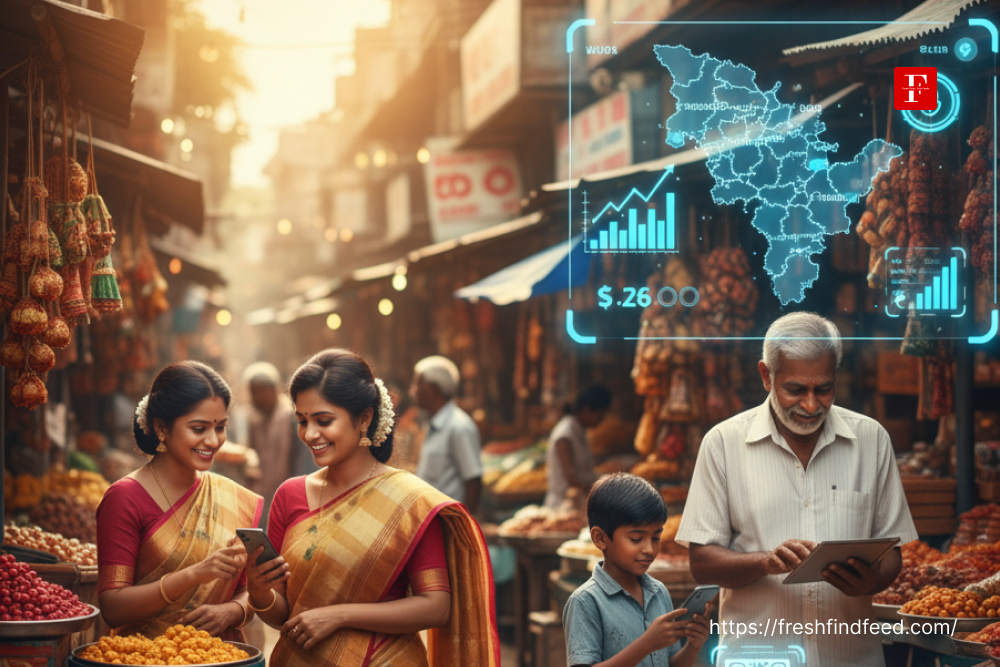
Odisha’s small businesses are entering a new era — where mobile apps, online payments, and e-commerce aren’t luxuries, but lifelines for growth and survival.

As India enters the second phase of its digital revolution, artificial intelligence and automation are not just transforming industries—they’re redefining what it means to work, earn, and adapt.

The conference brought together officials from ten central districts, including district collectors, tehsildars, registrars, and welfare officers, either virtually or in person.

We glorified sleepless nights, burnout, and exhaustion as signs of ambition. But when did working yourself to the edge become the definition of success?

Not everyone who thrives in tech writes code. Some design the very experiences that make technology human.






Leave Comments