





PM Modi: Global Tech Giants Keen to Join India’s SpaceTech Journey
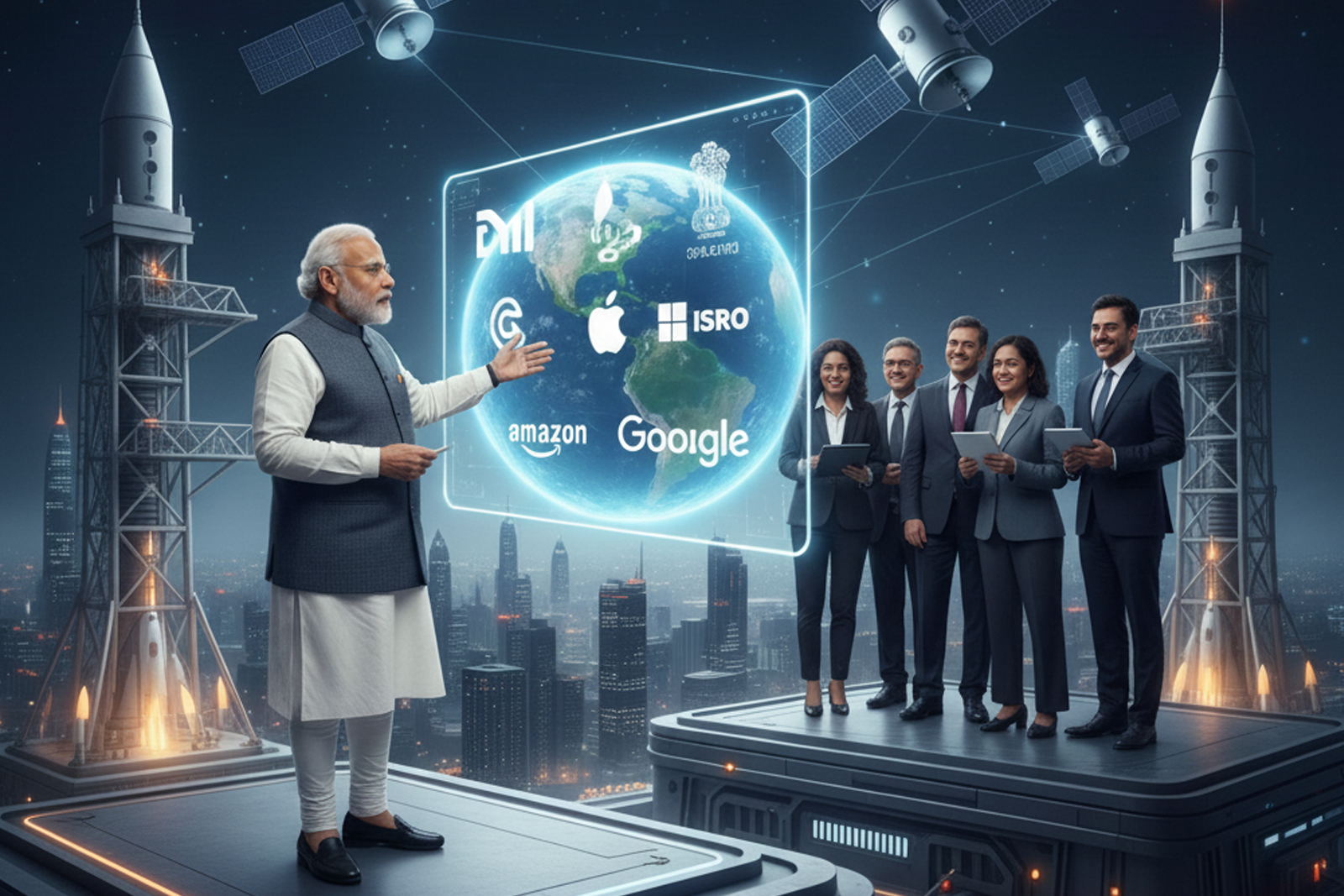
Prime Minister Narendra Modi has said that global technology leaders and aerospace companies are increasingly looking to collaborate with India as the country strengthens its position in the global spacetech landscape. He noted that India’s rapid progress in satellite development, launch capabilities and space research has caught the attention of international firms eager to partner with Indian innovators.
PM Modi highlighted that recent reforms in the space sector have opened new pathways for private enterprises, making India one of the most attractive destinations for technological collaboration. According to him, global companies see India not only as a promising market but also as a reliable partner with the expertise to co-create advanced space solutions.
The Prime Minister emphasized that India’s achievements in cost-effective missions, mission accuracy and indigenous innovation have helped build global trust in the country’s capabilities. He added that the growing involvement of startups and private entrepreneurs is reshaping the space ecosystem and driving fresh interest from abroad.
He further stated that India is focused on building a strong, future-ready space economy that supports international cooperation while addressing national priorities such as communication, navigation, climate monitoring and disaster response.
Industry experts believe this surge in global interest will lead to more joint ventures, technology-sharing agreements, and collaborative research projects, strengthening India’s role as a key player in the next era of spacetech innovation.

PM Modi also pointed out that India’s space sector is no longer limited to government-led missions, as private companies and startups are now playing a major role in developing breakthrough technologies. He said this shift has significantly increased India’s global appeal, with several international firms expressing interest in long-term strategic partnerships.
He added that India’s strong talent pool, engineering expertise and rapidly growing innovation ecosystem have become major advantages for companies planning to invest in spacetech. According to the Prime Minister, India’s combination of low-cost operations and high-quality outcomes makes it one of the most competitive destinations for space-related collaborations.
The government, he said, is committed to creating an environment where global and Indian companies can work together seamlessly. This includes clearer regulatory frameworks, easier access to testing facilities, and incentives to support research and development in advanced space technologies.
PM Modi also noted that India’s expanding portfolio of space missions—from lunar and planetary exploration to satellite communication and earth observation—has made the country a preferred collaborator for nations looking to advance their space agendas. He stressed that partnerships with international companies will accelerate innovation, boost exports and open new markets for Indian space products and services.
Industry observers believe that India’s growing global recognition will translate into a significant rise in foreign investments, technology transfer agreements and cross-border innovation programs. They say this momentum could position India as a global hub for space manufacturing, satellite services and next-generation space technologies.

Analysts note that India’s reputation as a dependable space partner has grown steadily over the past decade, especially after the success of missions like Chandrayaan, Mangalyaan, and the recent advancements in commercial launch services. These achievements, they say, have strengthened global confidence in India’s technical capabilities and mission reliability.
PM Modi emphasized that the government’s long-term vision is to build a world-class space infrastructure that can support not only national goals but also global needs. He mentioned that India aims to become a central hub for satellite manufacturing, low-cost launches, space-based data services, and cutting-edge research in areas such as reusable rockets and deep-space exploration.
The Prime Minister also underlined the importance of international collaboration in addressing global challenges. He said space technology can play a crucial role in climate tracking, precision agriculture, navigation, communication in remote regions, and disaster management. By working with global players, India hopes to develop more robust solutions that can benefit both developing and advanced nations.
Another factor drawing foreign companies to India is the country’s evolving policy framework, which encourages private participation and reduces bureaucratic hurdles. New policies have enabled startups to access critical testing infrastructure, collaborate with ISRO, and work on independent missions—opening the door for deeper international partnerships.
Industry leaders believe that this collaborative momentum will help India expand its footprint in the global space economy, which is projected to reach trillions of dollars in the coming decades. They expect that cross-border partnerships will accelerate technology development, create high-skilled jobs, and position India as a driving force in the global space revolution.
With global interest increasing, India is preparing to scale up its research facilities, strengthen its workforce and modernize its space manufacturing capabilities to meet rising demand from foreign partners. Experts say this is a defining moment for India’s space sector, as international recognition continues to grow and new opportunities emerge for collaboration at an unprecedented scale.


About The Author
Shivani Nayak is an emerging journalist committed to delivering accurate, timely, and impactful stories for a fast-growing digital news platform. With a keen interest in politics, public policy, and community reporting, she focuses on issues that directly affect everyday life. Her work reflects a strong belief in responsible journalism, transparency, and fact-based reporting. She brings a modern, digital-first approach to news coverage, blending field reporting with multimedia storytelling to reach audiences across platforms. From breaking developments to in-depth explainers and human-interest features, Anita strives to present news in a clear, accessible manner while maintaining editorial integrity. Driven by curiosity and a deep sense of social responsibility, she actively engages with sources at the grassroots level, ensuring diverse voices are represented. She is particularly interested in governance, education reform, infrastructure development, and civic affairs. Through her reporting, Anita aims to build trust with readers and contribute to a culture of informed public dialogue. As part of a new portal, she looks forward to growing alongside the publication and helping shape its journalistic identity in the digital age.
Shivani Nayak | Journalist


You Might Also Like
-
UK Deputy PM Calls Delhi AI Impact Summit a Defining Moment for Responsible Innovation The AI Impact Summit held in New Delhi has emerged as a ...
-
Social media platform X has acknowledged an error related to the functioning of its artificial intelligence tool, Grok, and has assured the Indian ...

Suggested Video