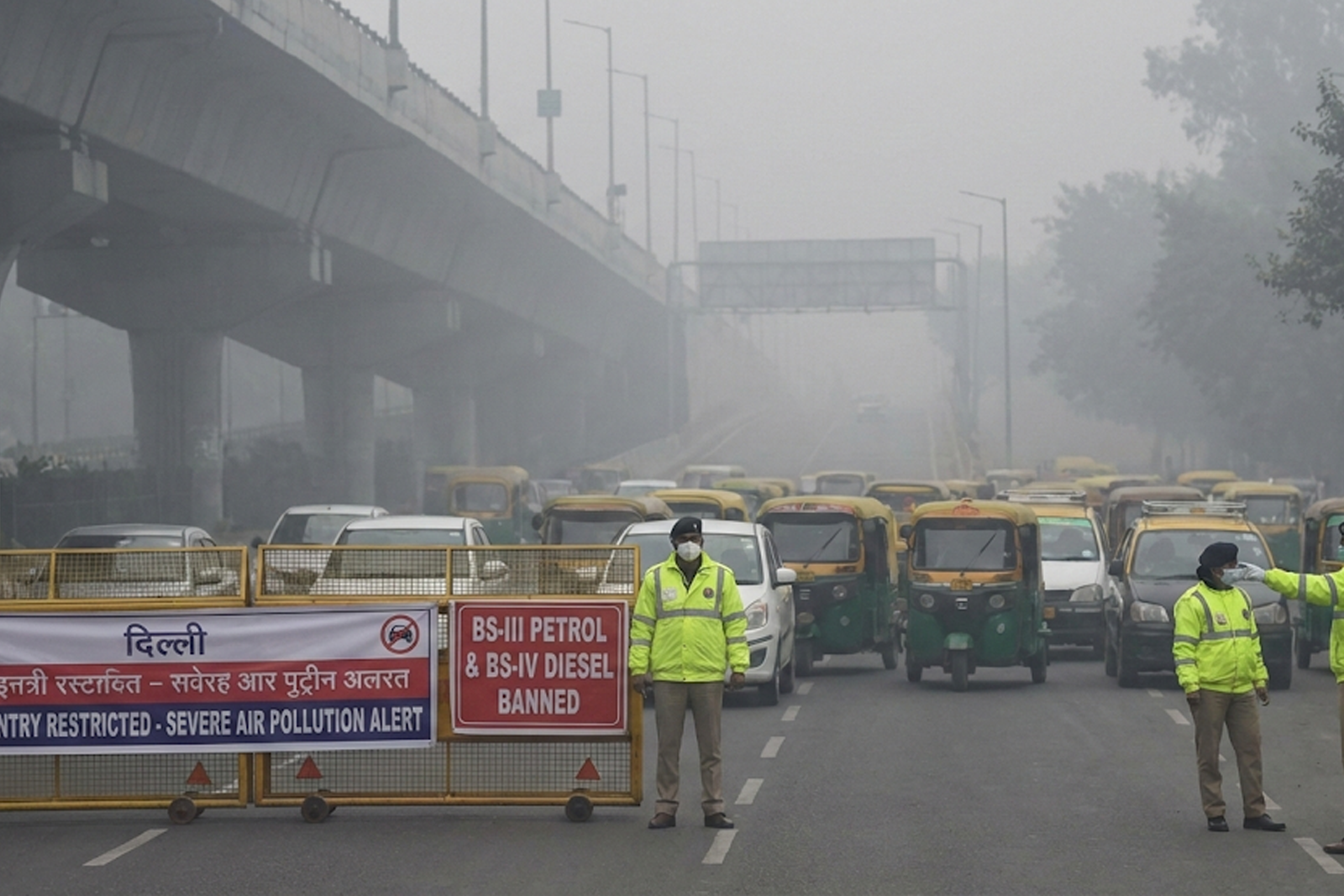
Delhi and its surrounding National Capital Region (NCR) have been placed under strict pollution-control measures after air quality levels plunged into the ‘severe’ category, triggering fresh restrictions on vehicle movement. The sharp rise in toxic pollutants has forced authorities to activate emergency protocols aimed at reducing emissions and protecting public health.
Under the latest restrictions, entry of certain vehicles into Delhi has been curtailed, particularly older petrol and diesel vehicles that fail to meet prescribed emission standards. Enforcement agencies have intensified checks at border points connecting NCR cities, with violators facing hefty fines and possible impoundment of vehicles.
Officials have urged residents to avoid non-essential travel and shift to public transport, carpooling, or work-from-home options wherever possible. Construction activities, diesel generator use, and other pollution-heavy operations have also come under tighter scrutiny as part of broader anti-smog measures.
Medical experts have warned that prolonged exposure to severe air pollution can lead to respiratory distress, eye irritation, and cardiovascular complications, especially among children, the elderly, and those with pre-existing conditions. Hospitals have reported an uptick in patients complaining of breathing difficulties since pollution levels spiked.
Authorities continue to monitor AQI trends on an hourly basis and have indicated that further restrictions may be imposed if conditions fail to improve. Residents are advised to stay updated with official notifications, limit outdoor activities, and use protective masks during peak pollution hours.
With winter conditions worsening air circulation, Delhi-NCR faces an uphill battle against pollution, making compliance with vehicle bans and environmental advisories crucial in the days ahead.
Authorities clarified that the current vehicle restrictions are part of an emergency response under graded pollution-control measures, which are activated when air quality crosses critical thresholds. These steps are designed to bring down emission levels quickly during high-risk periods, particularly in winter when low wind speed and temperature inversion trap pollutants close to the ground.
Traffic police and transport officials have been deployed in large numbers at major entry points, arterial roads, and toll plazas across Delhi-NCR. Automatic number plate recognition (ANPR) systems are also being used to identify non-compliant vehicles, ensuring round-the-clock enforcement without disrupting essential services.
Officials said vehicles involved in emergency services, public transport, and supply of essential goods are exempted from the ban. However, private vehicles that do not meet emission norms are being strictly regulated, with repeat offenders facing stricter penalties.
Environmental experts have pointed out that vehicular emissions remain one of the biggest contributors to Delhi’s pollution, along with industrial output, stubble burning, and construction dust. They stress that temporary restrictions, though inconvenient, are necessary to prevent long-term health damage and reduce the strain on healthcare systems.
Residents have been advised to follow pollution advisories closely, use air purifiers indoors if available, and avoid outdoor exercise during early morning and late evening hours when pollution levels peak. Schools and offices have also been asked to remain flexible with attendance policies depending on air quality trends.
Authorities indicated that the restrictions will be reviewed periodically and relaxed only after sustained improvement in AQI levels. Until then, cooperation from residents and commuters will play a key role in helping the capital breathe cleaner air.