




Myanmar Goes to Polls Amid Civil War, Critics Call Vote a ‘Sham’
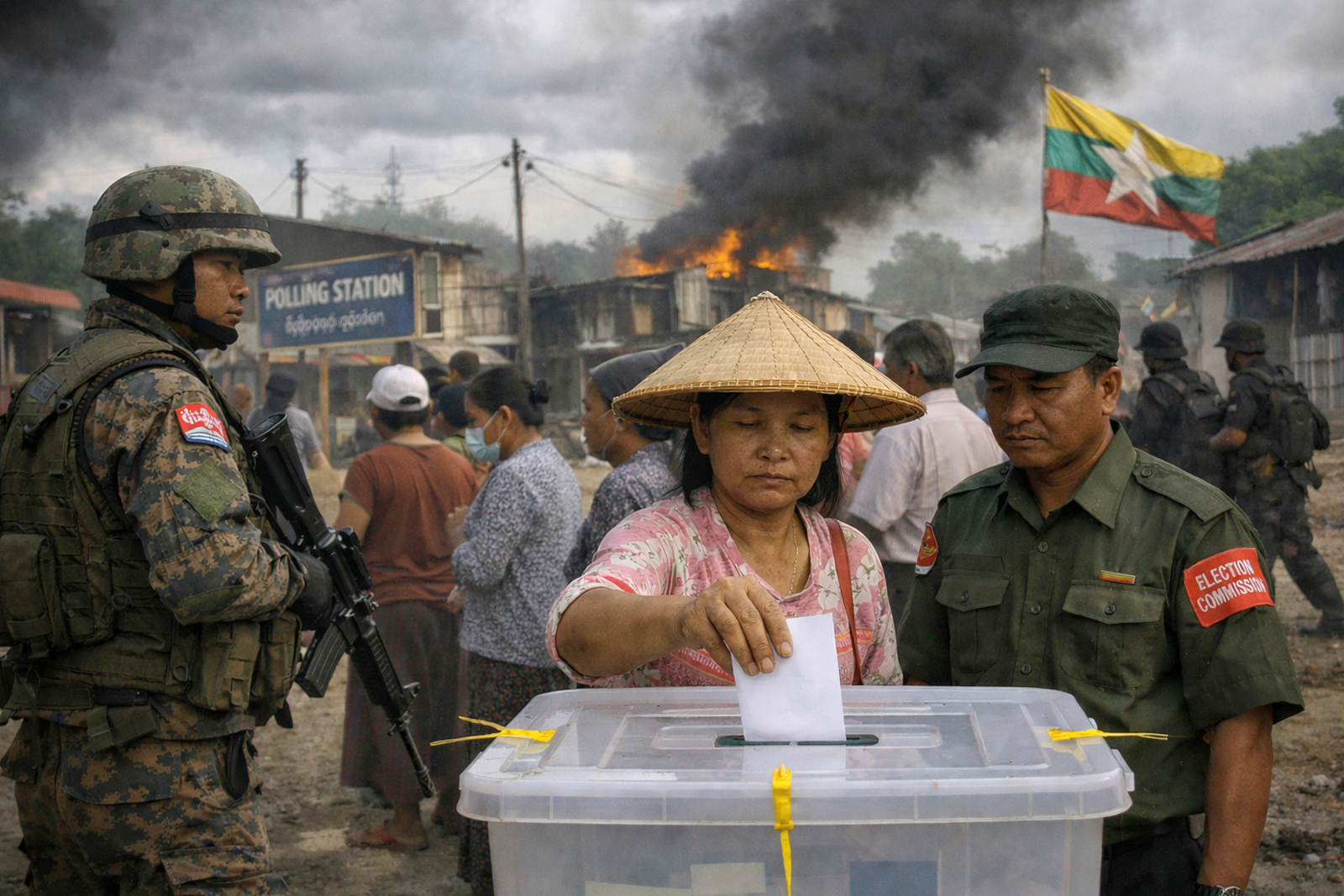
Myanmar has moved forward with a long-delayed election despite the country being deeply affected by armed conflict, displacement, and political instability. The vote, organised by the ruling military administration, has been widely criticised by opposition groups, civil society organisations, and international observers, who argue that the process lacks credibility and transparency.
Large parts of the country remain under the control of resistance groups, making voting impossible in several regions. Security concerns, frequent clashes, and curfews have further limited public participation. Many citizens have fled their homes over the past three years, while thousands of political leaders and activists remain imprisoned or barred from contesting the election.
The military government has promoted the election as a step towards restoring civilian governance. However, major opposition forces, including supporters of the ousted civilian leadership, have rejected the process, calling it an attempt to legitimise continued military rule. Independent media outlets have also faced severe restrictions, raising concerns over the fairness of campaigning and voter access to information.
International responses have been largely critical. Several governments and human rights groups have questioned whether a genuine democratic process can take place amid ongoing violence and widespread repression. They have urged dialogue, an end to hostilities, and the release of political detainees as prerequisites for credible elections.
As Myanmar’s crisis continues, analysts warn that the disputed vote is unlikely to resolve the country’s deep divisions. Instead, the election may further entrench political instability unless accompanied by meaningful steps toward reconciliation, inclusive dialogue, and peace.
The election has taken place under strict military supervision, with heavy security deployed in urban centres and sensitive regions. In many townships, voting was either limited or cancelled altogether due to fighting between the military and resistance forces. Reports from local sources indicate low voter turnout in several areas, reflecting public scepticism and fear amid ongoing violence.
Ethnic minority regions, which have long experienced conflict, remain among the most affected. Several ethnic armed organisations have rejected the election outright, stating that it does not address longstanding demands for autonomy, equality, and political inclusion. These groups argue that a military-controlled political process cannot deliver lasting peace.
The humanitarian situation continues to worsen alongside the political crisis. Millions of people are internally displaced, while access to food, healthcare, and education remains severely restricted. Aid agencies have warned that continued instability and insecurity are hindering relief efforts, leaving vulnerable communities at heightened risk.
The National Unity Government (NUG), formed by lawmakers ousted in the 2021 coup, has urged citizens to boycott the election. It maintains that any political roadmap excluding democratic forces and civil society lacks legitimacy. Pro-democracy activists have echoed this stance, describing the vote as disconnected from the realities faced by ordinary people.
Regional and global observers have stressed that Myanmar’s long-term stability depends on inclusive dialogue rather than unilateral political exercises. Neighbouring countries have expressed concern over cross-border impacts, including refugee flows and regional security risks.
As conflict persists and political trust remains fractured, the future of Myanmar’s governance remains uncertain. Many analysts believe that without ceasefires, political freedoms, and genuine participation from all stakeholders, elections alone cannot bring an end to the crisis gripping the nation.

About The Author
Shivani Nayak is an emerging journalist committed to delivering accurate, timely, and impactful stories for a fast-growing digital news platform. With a keen interest in politics, public policy, and community reporting, she focuses on issues that directly affect everyday life. Her work reflects a strong belief in responsible journalism, transparency, and fact-based reporting. She brings a modern, digital-first approach to news coverage, blending field reporting with multimedia storytelling to reach audiences across platforms. From breaking developments to in-depth explainers and human-interest features, Anita strives to present news in a clear, accessible manner while maintaining editorial integrity. Driven by curiosity and a deep sense of social responsibility, she actively engages with sources at the grassroots level, ensuring diverse voices are represented. She is particularly interested in governance, education reform, infrastructure development, and civic affairs. Through her reporting, Anita aims to build trust with readers and contribute to a culture of informed public dialogue. As part of a new portal, she looks forward to growing alongside the publication and helping shape its journalistic identity in the digital age.
Shivani Nayak | Journalist

You Might Also Like
-
Khaleda Zia, former prime minister of Bangladesh and one of the most influential figures in the country’s political history, passed away at t...
-
Bangladesh witnessed heightened tension on Sunday as protests intensified in several parts of the country following the death of Osman Hadi. Demons...

Suggested Video