





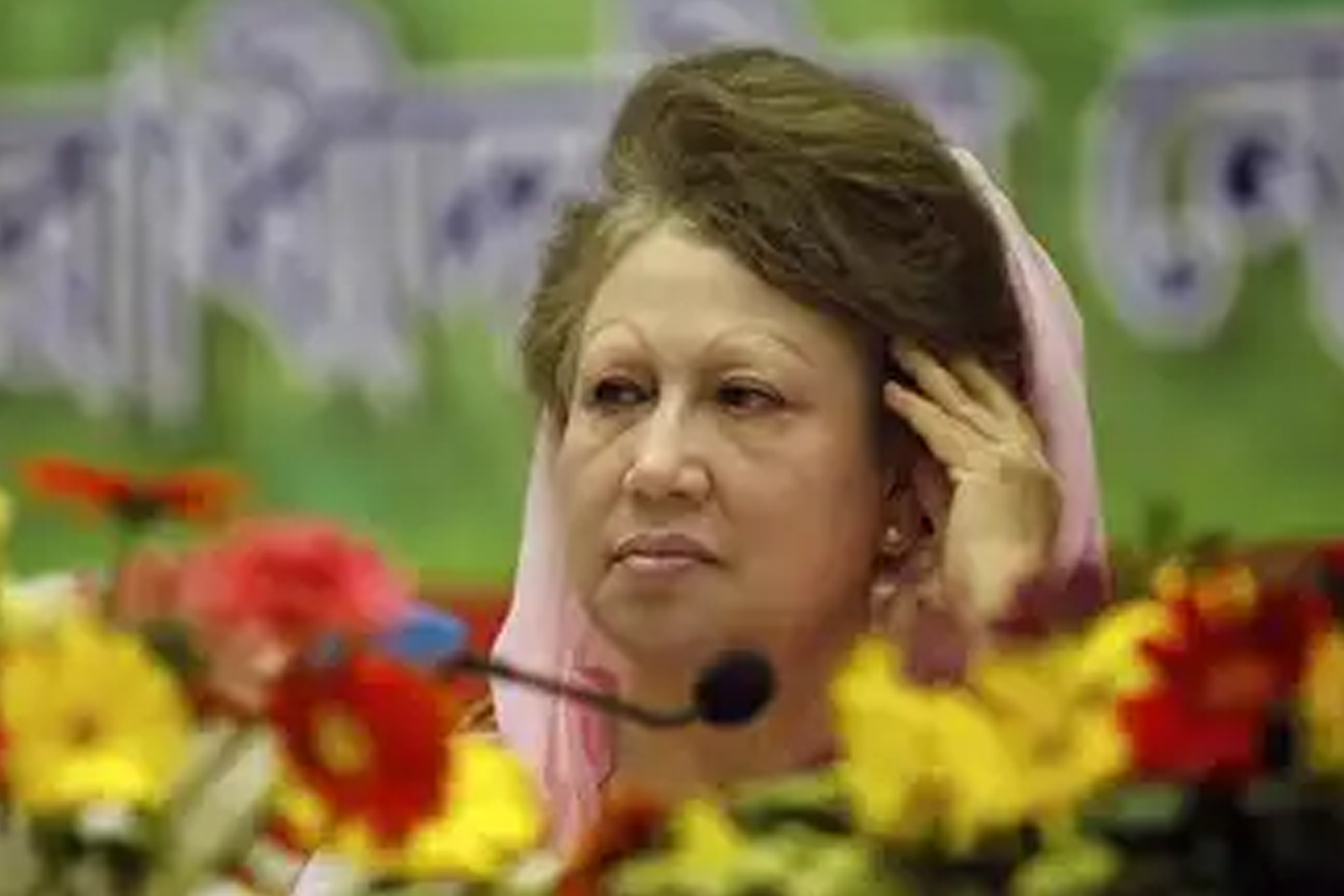
Khaleda Zia, Ex-Prime Minister of Bangladesh, Passes Away at 80
Khaleda Zia, former prime minister of Bangladesh and one of the most influential figures in the country’s political history, passed away at the age of 80. Her death marks the end of a long and turbulent chapter in Bangladeshi politics defined by intense rivalry, mass movements, and repeated shifts in power.
A two-time prime minister and chairperson of the Bangladesh Nationalist Party (BNP), Khaleda Zia rose to prominence in the 1990s, becoming the first woman to lead the country as prime minister. Her leadership shaped Bangladesh’s transition through fragile democratic phases, military-backed administrations, and deeply polarised elections.
For decades, Khaleda Zia’s political life was closely intertwined with her rivalry against Sheikh Hasina, the leader of the Awami League. The contest between the two women dominated national politics, often paralysing governance and triggering nationwide protests, strikes, and political unrest. Supporters viewed Khaleda Zia as a symbol of resistance and nationalism, while critics accused her of deepening political divisions.
In her later years, Khaleda Zia’s health deteriorated significantly, and she remained largely out of active politics. Her legal troubles and imprisonment became flashpoints in Bangladesh’s political discourse, with the BNP frequently alleging political persecution. Despite her absence from the frontline, her influence continued to shape opposition politics and electoral strategies.
Tributes have begun pouring in from party leaders, political rivals, and supporters across the country, acknowledging her role in shaping modern Bangladesh. Khaleda Zia leaves behind a complex legacy—one marked by leadership, controversy, and an enduring impact on the nation’s political landscape.
Born in 1945, Khaleda Zia entered politics after the assassination of her husband, President Ziaur Rahman, in 1981. She later took charge of the Bangladesh Nationalist Party and quickly emerged as a formidable political force. Her rise reshaped the country’s leadership landscape at a time when Bangladesh was navigating the fragile restoration of democracy.
Khaleda Zia served as prime minister twice—first from 1991 to 1996 and again from 2001 to 2006. During her tenure, her governments focused on economic liberalisation, infrastructure development, and strengthening ties with regional and global partners. However, her time in office was also marked by allegations of corruption, political violence, and strained democratic institutions.
The rivalry between Khaleda Zia and Sheikh Hasina became one of the most defining features of Bangladesh’s modern political history. Their confrontations often spilled onto the streets, leading to prolonged protests, hartals, and governance deadlocks. Analysts frequently described the rivalry as deeply personal as well as ideological, shaping electoral battles for more than three decades.
In her later years, Khaleda Zia faced multiple legal cases that resulted in her imprisonment, though she was later released on medical grounds. Her declining health kept her away from public appearances, while the BNP continued to operate under her symbolic leadership.
Following news of her death, condolences and reactions have poured in from political leaders, diplomats, and supporters both at home and abroad. Many acknowledged her role as a trailblazer for women in South Asian politics, while others reflected on the polarising impact of her career.
Khaleda Zia’s passing closes a significant chapter in Bangladesh’s political story. As the nation reflects on her legacy, debates over her contributions and controversies are expected to continue, underscoring her lasting influence on the country’s democratic journey.

About The Author
Soojin Das is a dedicated journalist with a strong focus on public affairs, governance, and grassroots reporting. With a passion for uncovering stories that matter, she brings clarity, accuracy, and depth to complex issues shaping communities across India. Her reporting spans politics, social development, education, and local civic concerns, giving readers a balanced and well-researched perspective. Known for her sharp news sense and ethical approach to journalism, Anita combines on-ground reporting with data-driven analysis and compelling storytelling. She has covered major policy announcements, elections, disaster response efforts, and community-led initiatives, ensuring that audiences receive timely and trustworthy information. Anita believes journalism plays a vital role in strengthening democracy and amplifying under-represented voices. Through interviews, investigative pieces, and human-interest stories, she aims to inform, engage, and empower readers. When not in the field, she closely follows media innovation and digital storytelling trends, continually refining her craft to meet the evolving needs of modern newsrooms.
Soojin Das | Journalist


You Might Also Like
-
Myanmar has moved forward with a long-delayed election despite the country being deeply affected by armed conflict, displacement, and political ins...
-
Bangladesh witnessed heightened tension on Sunday as protests intensified in several parts of the country following the death of Osman Hadi. Demons...

Suggested Video