Benjamin Netanyahu Announces Halt to Israeli Strikes on Iranian Gas Field Amid Rising Tensions
Israel Signals Pause in Energy-Sector Strikes
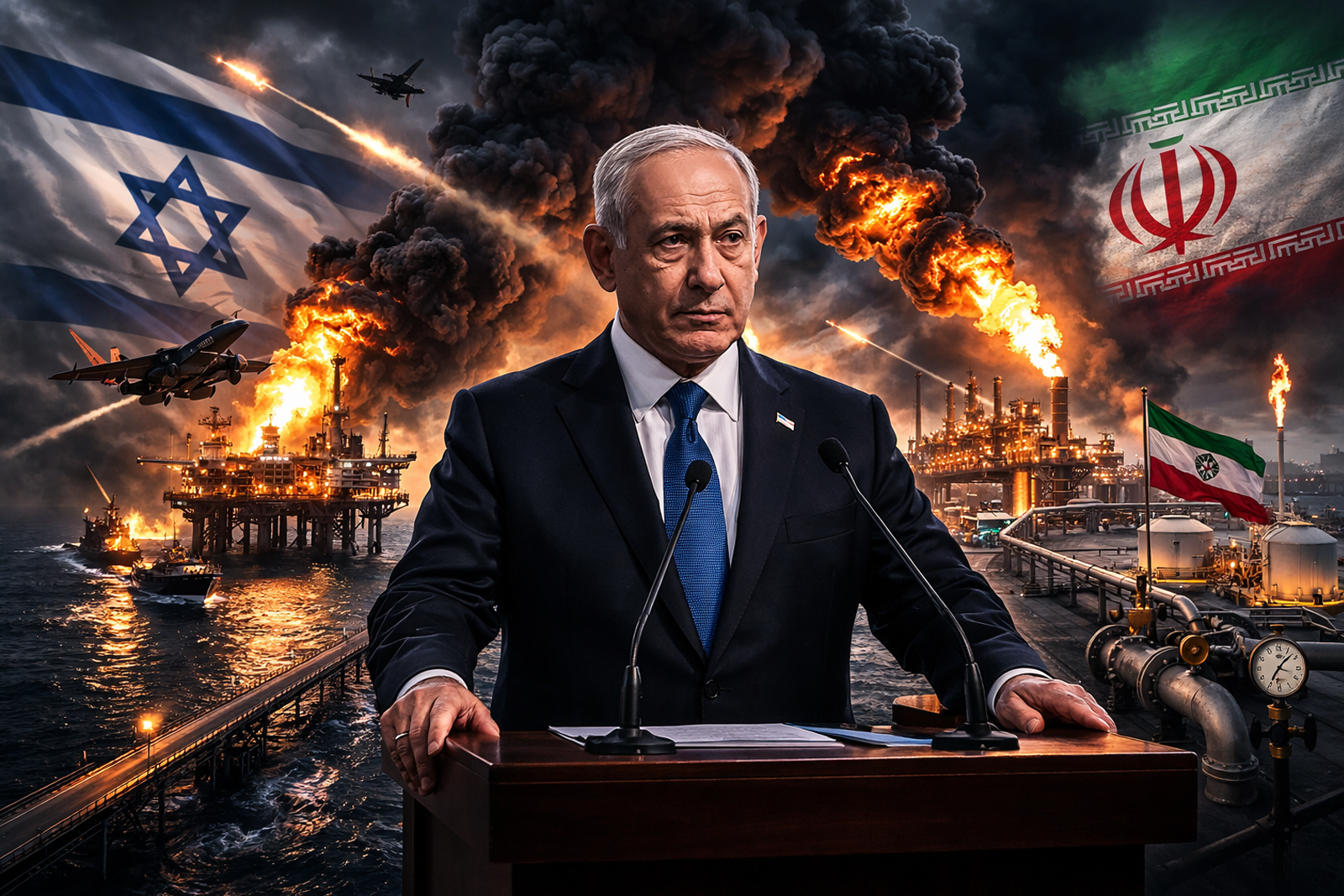
In a notable development amid rising regional friction, Benjamin Netanyahu confirmed that Israel will halt its attacks on an Iranian gas field, marking a strategic pause in a conflict that has increasingly targeted energy infrastructure. The announcement comes after days of heightened tension between Israel and Iran, raising global concerns over the stability of energy supplies and the risk of broader confrontation.
A Tactical Pause or Diplomatic Opening?
Officials suggest the decision may be aimed at preventing further escalation while allowing room for diplomatic engagement. Energy installations are considered highly sensitive targets, and continued strikes could have triggered severe economic and environmental consequences. By stepping back, Israel appears to be recalibrating its approach without fully abandoning its security objectives.
Analysts believe this move may also reflect behind-the-scenes pressure from international stakeholders urging restraint. Global powers have repeatedly warned that disruptions in the region’s energy sector could ripple through international markets, impacting fuel prices and economic stability far beyond the Middle East.
Regional and Global Implications
The pause has been cautiously welcomed by observers, though uncertainty remains over how long it will hold. Iran has yet to fully respond, and the situation remains fluid. While the halt in attacks may reduce immediate risks, underlying tensions between the two nations persist.
For now, the announcement offers a momentary breather in an otherwise volatile situation. Whether it evolves into a broader de-escalation or proves to be a temporary measure will depend on the next steps taken by both sides and the role of international diplomacy in the coming days.

Israel Pauses Strikes on Iranian Gas Field: Strategic Restraint or Temporary Shift?
In a development that could influence the trajectory of tensions in the Middle East, Benjamin Netanyahu announced that Israel will stop its attacks on a key Iranian gas field. The decision comes at a time when hostilities between Israel and Iran have been intensifying, particularly in areas linked to energy infrastructure. While the move signals restraint, it also raises critical questions about strategy, diplomacy, and the future of regional stability.
Background: Rising Tensions and Energy Targets
Over recent days, the conflict between Israel and Iran has taken a sharper turn, with energy installations becoming focal points. Gas fields are not only vital for national economies but also hold global significance due to their role in fuel supply chains. Targeting such infrastructure increases the stakes dramatically, as it can disrupt markets and provoke international concern.
Israel’s actions were widely viewed as part of a broader effort to counter perceived threats, while Iran condemned the strikes as aggressive and destabilizing. The situation quickly drew attention from global powers, many of whom urged both sides to avoid further escalation.
Key Highlights of the Announcement
-
Immediate Halt to Attacks
Benjamin Netanyahu confirmed that military operations targeting the Iranian gas field would cease with immediate effect.
-
Focus on Strategic Priorities
The Israeli leadership indicated that the decision aligns with broader national security considerations rather than signaling weakness.
-
Global Attention on Energy Security
The halt comes amid fears that continued strikes could disrupt energy supplies and impact international markets.
-
Uncertain Duration
No clear timeline has been provided, leaving analysts uncertain whether this is a temporary pause or a longer-term shift.
Why the Decision Matters
1. Preventing Escalation
Halting attacks on energy infrastructure reduces the risk of a larger conflict. Such targets are often seen as red lines, and continued strikes could have triggered a stronger response from Iran.
2. Economic Considerations
Energy facilities are critical to global supply chains. Any disruption can lead to rising fuel prices and economic uncertainty. By stepping back, Israel may be aiming to avoid unintended global consequences.
3. Diplomatic Signaling
The move could serve as a signal to international allies and mediators that Israel is open to reducing tensions, at least temporarily. It may also be an attempt to maintain diplomatic support.
Possible Motivations Behind the Move
Strategic Recalibration
Military analysts suggest that Israel could be reassessing its approach. A pause allows time to evaluate outcomes and consider alternative strategies without committing to prolonged escalation.
International Pressure
Global powers have consistently called for restraint. The risk of destabilizing energy markets likely intensified diplomatic efforts to de-escalate the situation.
Avoiding Wider Conflict
A direct and sustained confrontation between Israel and Iran could draw in other regional actors, making the situation far more complex and dangerous.
Iran’s Position and Likely Response
So far, Iran’s official response has remained measured, though firm in its criticism. The leadership has repeatedly emphasized its right to defend its infrastructure and sovereignty.
Possible responses include:
-
Diplomatic Engagement
Iran may choose to use the pause as an opportunity to push for international dialogue.
-
Strategic Patience
Rather than immediate retaliation, Iran could adopt a wait-and-watch approach to assess Israel’s next moves.
-
Strengthening Defenses
Increased security around key installations is likely, regardless of whether tensions ease.
Impact on Global Energy Markets
The Middle East plays a crucial role in global energy supply, and any instability in the region can have far-reaching effects. Even the threat of disruption can influence oil and gas prices.
Key Impacts
-
Market Volatility
News of attacks or pauses can lead to rapid fluctuations in global energy markets.
-
Supply Chain Concerns
Energy-importing nations closely monitor such developments, as prolonged conflict could disrupt supply routes.
-
Investor Sentiment
Stability in the region often reassures investors, while conflict tends to increase uncertainty.
What This Means for the Region
The halt in attacks provides a momentary pause in what has been a rapidly escalating situation. However, underlying tensions remain unresolved.
Short-Term Outlook
-
Reduced immediate risk of escalation
-
Increased diplomatic activity behind the scenes
-
Continued vigilance by regional and global powers
Long-Term Considerations
-
The core issues between Israel and Iran are unlikely to disappear quickly
-
Future incidents could reignite tensions
-
Sustainable peace would require broader diplomatic efforts
The Role of International Community
Global actors have a significant role to play in shaping the outcome of such conflicts. Calls for restraint have come from multiple countries and organizations concerned about both security and economic stability.
Efforts may include:
-
Mediation Initiatives
Encouraging dialogue between the two nations
-
Economic Measures
Using incentives or sanctions to influence behavior
-
Security Cooperation
Working with regional partners to prevent further escalation
Conclusion: A Pause, Not a Resolution
The decision byBenjamin Netanyahuto halt strikes on an Iranian gas field marks an important moment in an otherwise tense standoff. While it reduces immediate risks, it does not resolve the deeper issues driving the conflict betweenIsraelandIran.
For now, the region experiences a brief window of calm. Whether this pause evolves into a meaningful step toward de-escalation or remains a temporary adjustment will depend on the actions taken in the days ahead. The world will be watching closely, as the stakes extend far beyond the Middle East, touching global energy security and international stability.

Soojin DasJournalist
Soojin Das is a dedicated journalist with a strong focus on public affairs, governance, and grassroots reporting. With a passion for uncovering stories that matter, she brings clarity, accuracy, and depth to complex issues shaping communities across India. Her reporting spans politics, social development, education, and local civic concerns, giving readers a balanced and well-researched perspective.
Known for her sharp news sense and ethical approach to journalism, Anita combines on-ground reporting with data-driven analysis and compelling storytelling. She has covered major policy announcements, elections, disaster response efforts, and community-led initiatives, ensuring that audiences receive timely and trustworthy information.
Anita believes journalism plays a vital role in strengthening democracy and amplifying under-represented voices. Through interviews, investigative pieces, and human-interest stories, she aims to inform, engage, and empower readers.
When not in the field, she closely follows media innovation and digital storytelling trends, continually refining her craft to meet the evolving needs of modern newsrooms.