






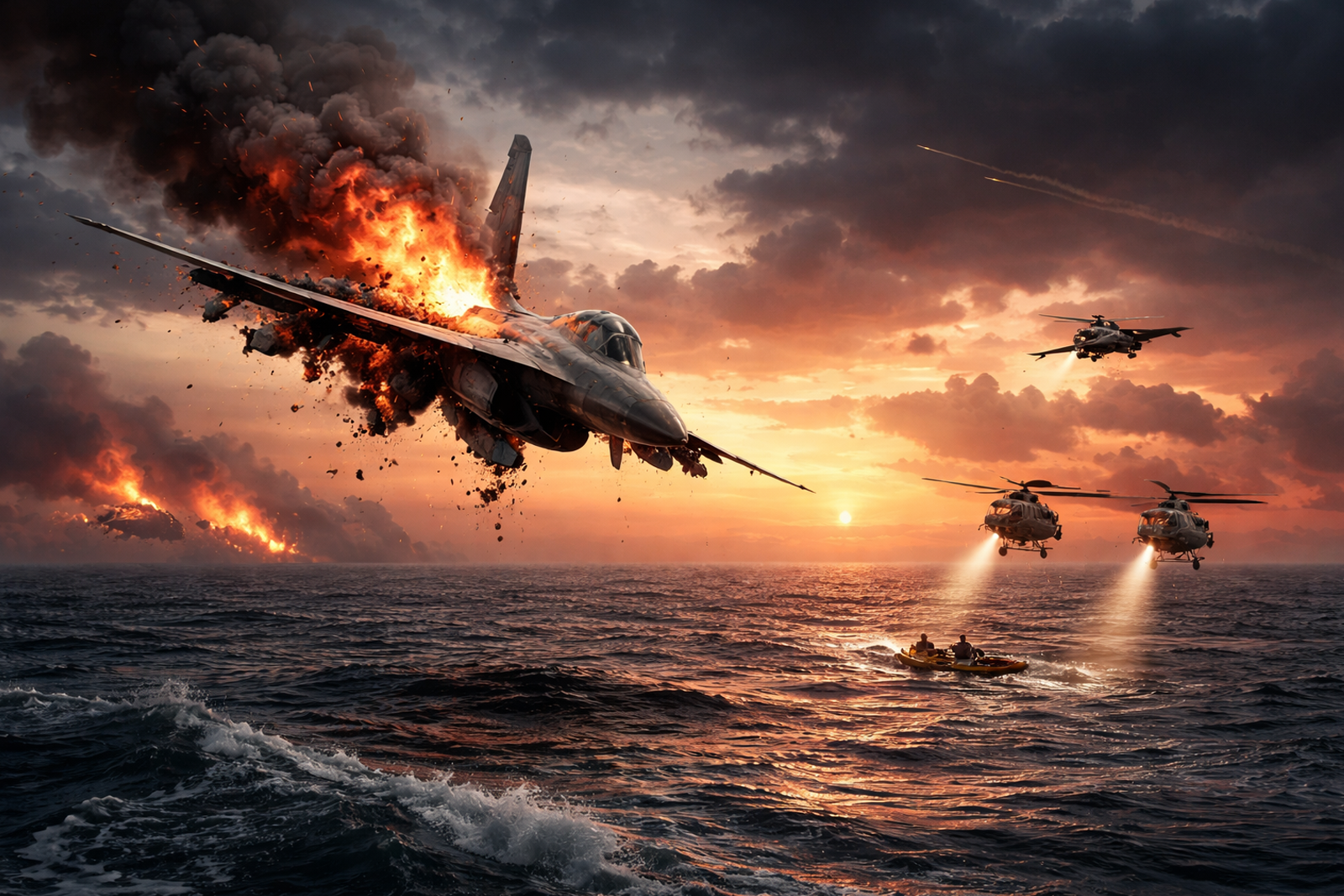
Iran Claims Second U.S. Jet Downed in Gulf Amid Escalating War Tensions
Iran Claims Second U.S. Jet Downed as Gulf Tensions Escalate
The already volatile situation in the Middle East has intensified after Iran’s military announced that it had downed a second U.S. jet in the Gulf region. The claim, which has not yet been independently verified, comes amid the ongoing Iran-Israel conflict, raising fears of a broader confrontation that could draw in global powers.
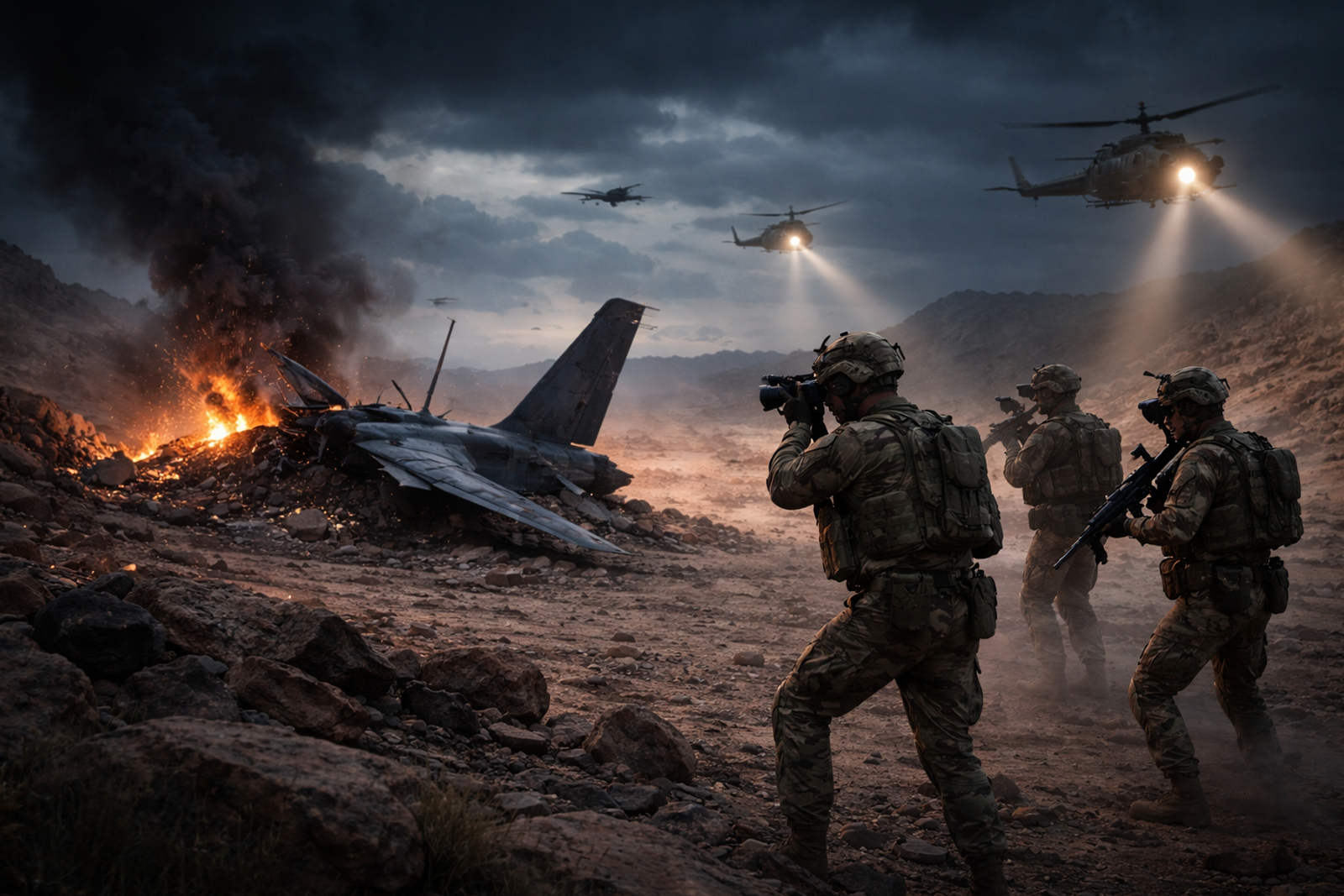
According to Iranian state media, the aircraft was targeted during heightened military activity over strategic waters. Officials in Tehran described the action as a defensive response to what they termed as “unauthorized presence” in their operational zone. Meanwhile, U.S. authorities have not confirmed the incident and are reportedly assessing the situation, including possible search-and-rescue operations.
Rising Regional and Global Concerns
The development has triggered alarm across international communities, with experts warning that such incidents could rapidly escalate into a larger conflict. The Gulf region, a critical hub for global oil supply and maritime trade, has long been a flashpoint for geopolitical tensions. Any military clash involving the United States risks destabilizing not only the Middle East but also the global economy.
Uncertainty and Calls for Restraint
With conflicting narratives emerging, the lack of verified information has added to the uncertainty. Several world leaders and international organizations have urged restraint and called for diplomatic dialogue to prevent further escalation. As the situation unfolds, all eyes remain on the Gulf, where even a single miscalculation could have far-reaching consequences.
The coming days are expected to be crucial in determining whether the crisis can be contained or spirals into a wider regional conflict.
Iran Claims Second U.S. Jet Downed: Gulf Crisis Enters Dangerous New Phase
The geopolitical tensions in the Middle East have taken a sharp and alarming turn following Iran’s claim that it has successfully downed a second United States military jet in the Gulf region. This development comes amid the already strained environment created by the ongoing Iran-Israel conflict, pushing the region closer to a potential large-scale confrontation. While the claim remains unverified by independent international sources, it has nonetheless intensified global concern and triggered urgent calls for restraint.
What Iran Has Claimed
Iranian military officials, through state-backed media channels, stated that their defense systems intercepted and destroyed a U.S. aircraft operating within what they described as a sensitive and restricted zone. According to Tehran, the action was taken as part of defensive measures to safeguard national security and territorial integrity.
Key points from Iran’s statement:
- The aircraft was allegedly detected entering a high-alert defense zone.
- Iranian forces responded using advanced air defense systems.
- Officials described the action as “necessary and justified.”
- The claim marks the second such incident in a short span of time.
U.S. Response and Silence
As of now, the United States has not officially confirmed the loss of any aircraft. Defense authorities are reportedly monitoring the situation closely and conducting internal assessments. The absence of immediate confirmation has added a layer of uncertainty to the situation, leaving room for speculation and conflicting narratives.
Key observations from the U.S. side:
- No formal acknowledgment of the downed aircraft.
- Possible search-and-rescue operations under evaluation.
- Increased surveillance and monitoring in the Gulf.
- Diplomatic channels remain active but cautious.
Why the Gulf Region Matters
The Gulf region is one of the most strategically important areas in the world, serving as a major route for global oil shipments and international trade. Any military escalation in this zone has the potential to disrupt not just regional stability but also the global economy.
Strategic importance of the Gulf:
- Handles a significant percentage of global oil exports.
- Hosts critical maritime shipping lanes.
- Serves as a military hotspot with multiple international forces present.
- Acts as a geopolitical bridge between Asia, Europe, and Africa.
Rising Risk of a Wider Conflict
The claim of a second downed jet has significantly raised the stakes. Analysts warn that repeated military confrontations, even if unverified, can lead to miscalculations and unintended escalation. With multiple global powers having vested interests in the region, the situation is highly sensitive.
Potential risks ahead:
- Escalation into direct U.S.-Iran conflict.
- Increased involvement of allied nations.
- Disruption in global oil supply chains.
- Heightened military deployments across the region.
Global Reactions and Diplomatic Pressure
The international community has responded with concern, urging all parties to exercise restraint and avoid actions that could worsen the situation. Several countries and global organizations are calling for immediate dialogue and peaceful resolution.
Global response highlights:
- Calls for de-escalation from world leaders.
- Emphasis on diplomatic engagement.
- Concerns over economic and security implications.
- Monitoring by international organizations.
Information War and Conflicting Narratives
One of the major challenges in the current situation is the lack of verified information. Both sides appear to be controlling narratives, making it difficult for the global audience to determine the exact sequence of events.
Challenges in information clarity:
- Dependence on state-controlled media reports.
- Absence of independent verification.
- Rapid spread of unconfirmed updates on digital platforms.
- Risk of misinformation influencing public perception.
Impact on Global Markets and Economy
Even the possibility of escalating conflict in the Gulf has immediate effects on global markets. Oil prices often react sharply to such developments, and investor confidence can be shaken by geopolitical instability.
Economic implications include:
- Fluctuations in crude oil prices.
- Volatility in global stock markets.
- Disruptions in supply chains.
- Increased uncertainty for international trade.
What Happens Next?
The coming days are expected to be crucial in shaping the trajectory of this crisis. Whether the situation escalates or stabilizes will largely depend on diplomatic efforts, verification of claims, and military responses from both sides.
Key factors to watch:
- Official confirmation or denial from the United States.
- Further military activity in the Gulf.
- Diplomatic talks or emergency meetings.
- Statements from global powers and alliances.
Conclusion: A Critical Moment for Global Stability
Iran’s claim of downing a second U.S. jet has added a new layer of complexity to an already tense geopolitical landscape. While the truth behind the claim remains uncertain, its impact is undeniable. The situation underscores the fragile nature of peace in the Middle East and the far-reaching consequences of military escalation.
At this critical juncture, restraint, transparency, and diplomacy are more important than ever. The world watches closely as events unfold, aware that even a single misstep could trigger a chain reaction with global repercussions.

About The Author
Shivani Nayak is an emerging journalist committed to delivering accurate, timely, and impactful stories for a fast-growing digital news platform. With a keen interest in politics, public policy, and community reporting, she focuses on issues that directly affect everyday life. Her work reflects a strong belief in responsible journalism, transparency, and fact-based reporting. She brings a modern, digital-first approach to news coverage, blending field reporting with multimedia storytelling to reach audiences across platforms. From breaking developments to in-depth explainers and human-interest features, Anita strives to present news in a clear, accessible manner while maintaining editorial integrity. Driven by curiosity and a deep sense of social responsibility, she actively engages with sources at the grassroots level, ensuring diverse voices are represented. She is particularly interested in governance, education reform, infrastructure development, and civic affairs. Through her reporting, Anita aims to build trust with readers and contribute to a culture of informed public dialogue. As part of a new portal, she looks forward to growing alongside the publication and helping shape its journalistic identity in the digital age.
Shivani Nayak | Journalist

You Might Also Like
-
Search Intensifies as Geopolitical Tensions Rise The urgent search for a missing U.S. airman has drawn international attention, as rescue teams...
-
Iran Rejects Trump’s Ceasefire Claim, Calls It ‘False and Baseless’ Iran has strongly dismissed former U.S. President Donald ...
Suggested Video