






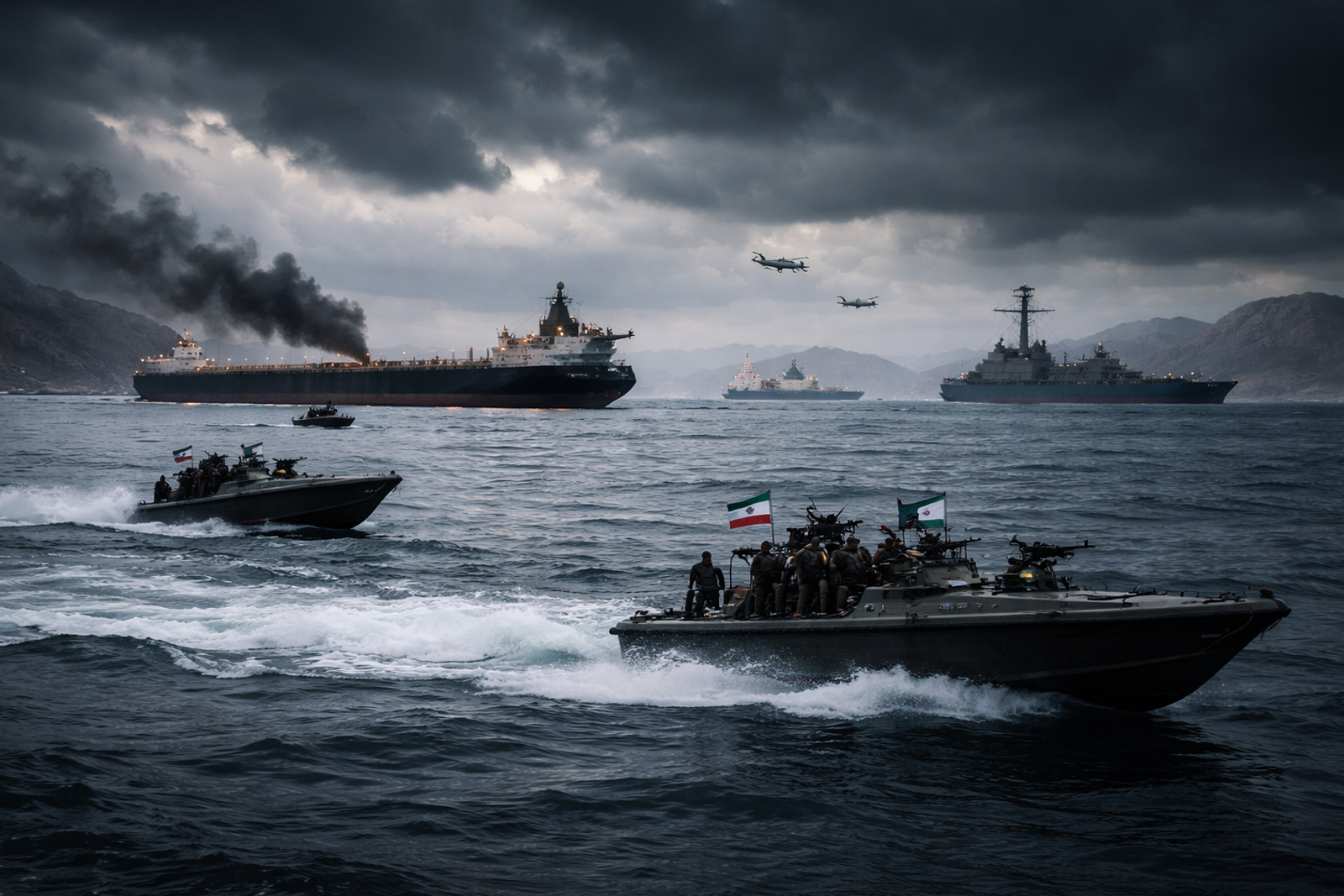
Hormuz Flashpoint: US Slams Iran’s Strait Move as ‘Unacceptable’ Amid War Tensions
Hormuz Flashpoint: US Slams Iran’s Strait Move as ‘Unacceptable’ Amid War Tensions
The ongoing conflict between the United States and Iran has taken a dangerous turn after Tehran announced the closure of the Strait of Hormuz, one of the world’s most critical maritime oil routes. This narrow passage, located between the Persian Gulf and the Gulf of Oman, handles nearly a fifth of the global oil supply, making any disruption a matter of international concern.
Strategic Importance of the Strait
The Strait of Hormuz is not just a regional waterway—it is a lifeline for global energy markets. Major oil-producing nations rely on this route to transport crude oil to international markets, including Asia, Europe, and North America. With Iran’s decision to restrict movement through the strait, fears of supply shortages and rising fuel prices have intensified across the globe.
Strong Reaction from Washington
The White House has strongly condemned Iran’s move, calling it “unacceptable” and a direct threat to global economic stability. U.S. officials have warned that such actions could lead to severe consequences, including potential military responses or stricter economic sanctions. The United States has also begun coordinating with allies to ensure freedom of navigation and secure vital shipping lanes.
Global Economic Impact
Markets have reacted swiftly to the escalating tensions. Oil prices surged immediately after the announcement, reflecting concerns about supply disruptions. Countries heavily dependent on Middle Eastern oil are closely monitoring the situation, while shipping companies are reconsidering routes due to safety risks.
Risk of Wider Conflict
Experts believe that closing the Strait of Hormuz could further inflame an already volatile situation in the region. Any military confrontation in these waters could disrupt not only oil supplies but also global trade. Diplomatic channels are being tested as international leaders call for restraint and dialogue to prevent further escalation.
Call for De-escalation
Amid rising tensions, global powers and international organizations are urging both nations to step back from confrontation. The situation remains fluid, and the coming days will be crucial in determining whether diplomacy can prevail over conflict.
The closure of the Strait of Hormuz has once again highlighted how regional conflicts can have far-reaching global consequences, affecting economies, energy security, and geopolitical stability worldwide.
Strait of Hormuz Standoff: Iran’s Move Sparks Global Alarm and Strategic Uncertainty
The intensifying confrontation between the United States and Iran has reached a critical juncture after Tehran announced the closure of the Strait of Hormuz, a move that has sent shockwaves through global markets and diplomatic circles. Widely regarded as one of the most strategically vital waterways in the world, the strait serves as a crucial artery for international oil shipments. With tensions already running high, this development has deepened fears of a broader geopolitical crisis.
Why the Strait of Hormuz Matters to the World
The Strait of Hormuz is a narrow but indispensable maritime corridor that connects the Persian Gulf to the open ocean. A significant portion of the world’s oil exports flows through this route daily, making it central to global energy security. Any disruption in this passage has immediate consequences for oil supply chains and energy-dependent economies.
Countries across Asia, including India, China, Japan, and South Korea, depend heavily on oil shipments passing through this strait. A blockade not only threatens supply but also increases transportation costs, insurance premiums, and delivery timelines. This makes the situation not just a regional issue, but a global economic concern.
Iran’s Strategic Calculations Behind the Closure
Iran’s decision to close the Strait of Hormuz is being seen as a calculated geopolitical move. Analysts believe that Tehran aims to exert pressure on the United States and its allies by leveraging its geographic advantage. By controlling access to such a critical route, Iran sends a strong signal about its ability to influence global energy markets.
The move may also be intended as a response to mounting economic sanctions and diplomatic isolation. By escalating the situation, Iran could be attempting to force negotiations on more favorable terms or demonstrate its resilience against external pressure.
United States Response and Military Readiness
The United States has reacted sharply, labeling the closure “unacceptable” and emphasizing the importance of maintaining freedom of navigation. Washington has historically maintained a strong naval presence in the region to ensure the security of maritime routes, and this situation is no exception.
Military assets, including naval fleets and surveillance systems, are being closely monitored and potentially repositioned. The U.S. has also begun consultations with allied nations to form a coordinated response. While officials have not confirmed immediate military action, the possibility remains on the table if the situation escalates further.
Impact on Global Oil Markets and Trade
One of the most immediate effects of the crisis has been seen in global oil markets. Prices have surged due to fears of supply disruptions, reflecting the market’s sensitivity to developments in the region. Even the perception of risk can lead to volatility, and an actual blockade intensifies these concerns.
Shipping companies are also facing uncertainty. Insurance costs for vessels passing near conflict zones have increased, and some operators may choose to reroute shipments, leading to delays and higher logistical expenses. These factors contribute to inflationary pressures worldwide, affecting everything from fuel prices to consumer goods.
Regional Reactions and Strategic Concerns
Neighboring countries in the Middle East are closely watching the situation unfold. Many of them rely on the Strait of Hormuz for their own exports and economic stability. A prolonged closure could strain regional economies and disrupt long-standing trade relationships.
At the same time, regional powers may be drawn into the conflict, either directly or indirectly. This raises concerns about a wider confrontation that could destabilize the entire Middle East, a region already grappling with multiple geopolitical challenges.
Diplomatic Efforts and Calls for Restraint
Amid the rising tensions, international leaders and organizations are calling for calm and urging both sides to engage in dialogue. Diplomatic channels remain active, with several countries offering to mediate and de-escalate the situation.
The focus is on preventing a military confrontation that could have catastrophic consequences. Negotiations, however, are complex and require concessions from both sides, which may not be easily achievable given the current climate of mistrust.
Risks of Military Escalation
The closure of such a critical waterway increases the likelihood of accidental or intentional military clashes. Naval encounters in congested waters can quickly spiral out of control, especially in a high-tension environment.
Any direct conflict between the United States and Iran could have far-reaching implications, potentially drawing in other global powers. This would not only impact the region but could also reshape international alliances and security dynamics.
Long-Term Implications for Global Energy Security
This crisis underscores the vulnerability of global energy infrastructure to geopolitical tensions. It highlights the need for diversification of energy sources and routes to reduce dependence on single chokepoints like the Strait of Hormuz.
Countries may accelerate investments in alternative energy, strategic reserves, and new transportation corridors. While such changes take time, the current situation serves as a wake-up call for policymakers worldwide.
Economic Ripple Effects Beyond Oil
While oil remains the most immediate concern, the broader economic impact extends beyond energy. Global trade relies heavily on stable shipping routes, and disruptions can affect supply chains across multiple industries.
From manufacturing to agriculture, sectors worldwide could feel the effects of increased costs and delays. Financial markets may also experience volatility as investors react to uncertainty and geopolitical risks.
The Road Ahead: Uncertainty and Strategic Decisions
The coming days will be crucial in determining the trajectory of this الأزمة. Whether the situation moves toward de-escalation or further confrontation depends on the decisions made by both nations and the effectiveness of diplomatic efforts.
What remains clear is that the closure of the Strait of Hormuz is not just a regional issue—it is a global crisis with implications for energy, trade, and international stability. The world now watches closely as events unfold, hoping for a resolution that avoids further escalation and restores confidence in global systems.
Conclusion
The Iran–U.S. standoff over the Strait of Hormuz has once again demonstrated how interconnected the modern world is. A single geopolitical move can ripple across continents, affecting economies, governments, and everyday lives. As tensions remain high, the priority for the international community is clear: prevent escalation, ensure stability, and seek a path toward lasting peace.

About The Author
Shivani Nayak is an emerging journalist committed to delivering accurate, timely, and impactful stories for a fast-growing digital news platform. With a keen interest in politics, public policy, and community reporting, she focuses on issues that directly affect everyday life. Her work reflects a strong belief in responsible journalism, transparency, and fact-based reporting. She brings a modern, digital-first approach to news coverage, blending field reporting with multimedia storytelling to reach audiences across platforms. From breaking developments to in-depth explainers and human-interest features, Anita strives to present news in a clear, accessible manner while maintaining editorial integrity. Driven by curiosity and a deep sense of social responsibility, she actively engages with sources at the grassroots level, ensuring diverse voices are represented. She is particularly interested in governance, education reform, infrastructure development, and civic affairs. Through her reporting, Anita aims to build trust with readers and contribute to a culture of informed public dialogue. As part of a new portal, she looks forward to growing alongside the publication and helping shape its journalistic identity in the digital age.
Shivani Nayak | Journalist


You Might Also Like
-
Trump’s “End of Civilisation” Remark Sparks Global Reaction as Iran Fires Back Tensions between the United States and Iran ha...
-
Rising Tensions as Trump Issues Stark Warning to Iran The geopolitical climate in the Middle East has taken a sharp turn after former U.S. Pres...

Suggested Video