







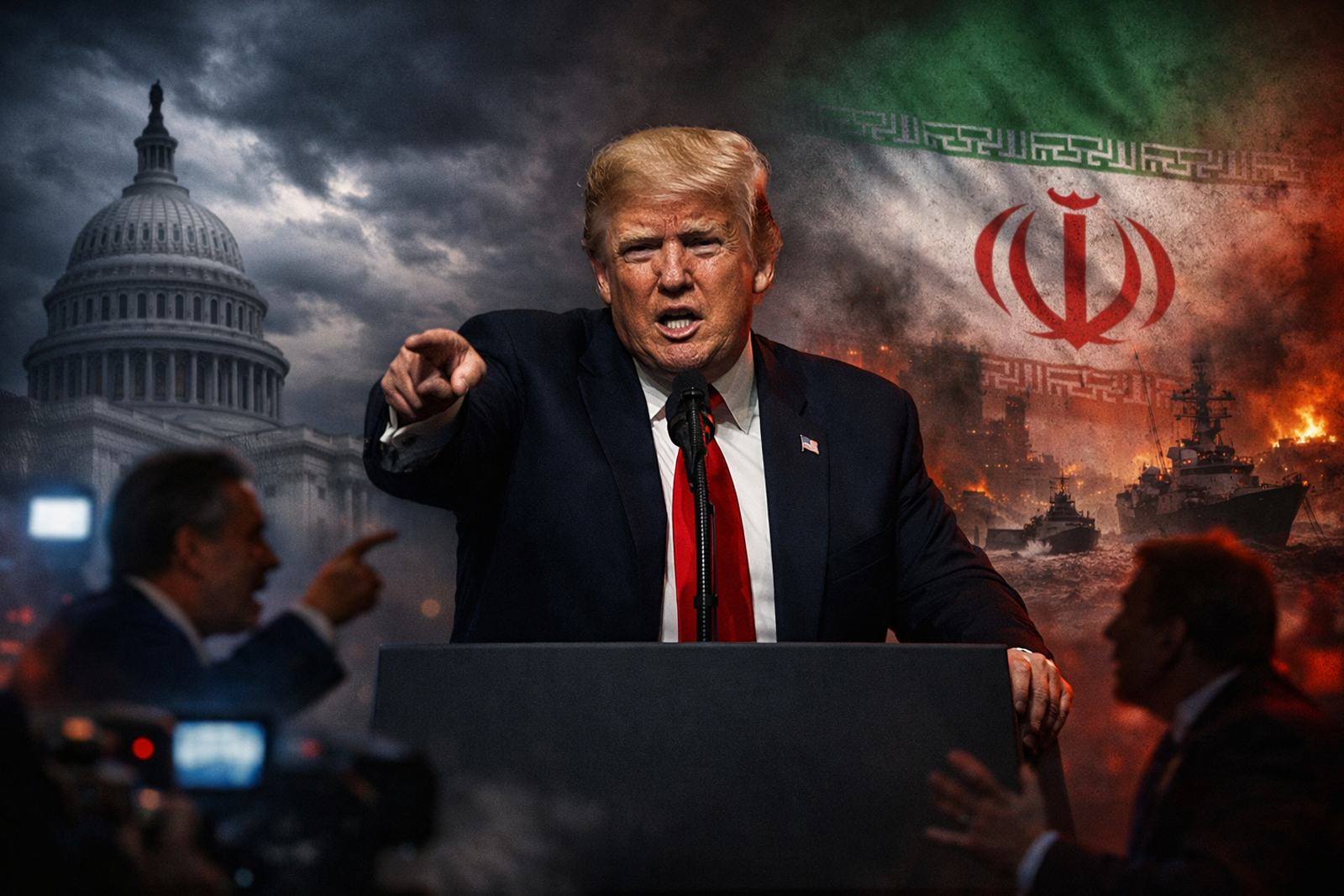
Trump on Iran Ceasefire: ‘No Pressure for Deal’, Slams ‘Fake News’ and Hits Out at Democrats
Trump Rejects Pressure on Iran Ceasefire Talks, Escalates Attack on Media and Democrats
Former U.S. President Donald Trump has declared that he is “under no pressure” to push forward a ceasefire agreement involving Iran, Israel, and the United States, signaling that any peace initiative would happen strictly on terms favorable to American interests. His remarks come at a time when diplomatic efforts are being closely watched amid fears of wider conflict in the Middle East.
Speaking in his trademark combative tone, Trump dismissed reports suggesting that Washington is rushing to secure an agreement with Tehran. He argued that the U.S. retains the upper hand and does not need to negotiate from a position of urgency. According to Trump, recent media coverage has exaggerated the pressure on American leadership to quickly broker peace in the region.
In the same statement, Trump turned his criticism toward major news outlets, accusing them of spreading “fake news” about the negotiations. He claimed that inaccurate reporting is creating confusion over the real state of diplomacy between the involved nations. By framing the narrative as media distortion, Trump sought to reassure supporters that the U.S. is not making concessions behind the scenes.
Trump also intensified his rhetoric against Democratic leaders, branding some of them as “traitors” for what he described as weak foreign policy positions. He accused them of undermining American leverage by advocating softer diplomatic strategies with Iran. The sharp political language reflects how international conflicts often become central issues in domestic political battles, especially during moments of heightened global uncertainty.
The broader geopolitical backdrop remains fragile. Tensions between Israel and Iran have escalated in recent months, raising concerns about military confrontation that could destabilize the region. Any ceasefire arrangement would likely involve complicated negotiations around military operations, sanctions, and security guarantees for all parties.
Trump’s latest remarks highlight the delicate balance between diplomacy and political messaging. While ceasefire talks are often presented as urgent humanitarian measures, leaders also use such moments to project strength and gain political advantage. Trump’s insistence that he faces “no pressure” is aimed at reinforcing the perception that American negotiators remain in control.
As diplomatic discussions continue, the world is watching to see whether rhetoric will give way to meaningful progress. For now, Trump’s comments underscore the political tensions surrounding any potential peace deal and reveal how deeply intertwined international diplomacy has become with domestic political rivalry.
Trump Dismisses Pressure on Iran Ceasefire, Intensifies Political and Media Criticism
Former U.S. President Donald Trump has once again stirred global attention by asserting that he is “under no pressure” to finalize any ceasefire arrangement involving Iran, Israel, and the United States. His remarks come at a time when tensions in the Middle East remain high and diplomatic channels are actively exploring ways to avoid further escalation. Trump’s statement not only reflects his stance on foreign policy but also underscores the intersection of international negotiations with domestic political narratives.
A Firm Stand on Negotiation Leverage
Trump’s central message revolves around maintaining strategic leverage. By stating he is not under pressure, he aims to project confidence and control over the situation.
- He emphasized that the U.S. should never appear desperate in negotiations.
- According to him, strong positioning ensures better outcomes in any ceasefire agreement.
- He suggested that rushing into a deal could weaken long-term strategic interests.
This approach aligns with his broader foreign policy philosophy, where strength and unpredictability are often used as tools to influence adversaries.
Ceasefire Talks in a Volatile Region
The potential ceasefire between Iran and Israel is part of a larger effort to prevent a broader regional conflict.
- Rising military tensions have increased fears of a prolonged confrontation.
- Diplomatic intermediaries are working behind the scenes to ease hostilities.
- The involvement of the United States adds significant weight to negotiations.
Any agreement would likely involve complex conditions, including military de-escalation, regional security assurances, and economic considerations such as sanctions.
Sharp Criticism of Media Coverage
Trump did not hold back in his criticism of the media, accusing several outlets of misrepresenting the situation.
- He labeled reports about urgent pressure as “fake news.”
- Trump argued that exaggerated narratives create unnecessary panic.
- He claimed that such reporting undermines public understanding of diplomacy.
His remarks reflect an ongoing tension between political figures and media organizations, particularly during high-stakes international developments.
Targeting Democratic Leadership
In addition to media criticism, Trump launched a strong attack on Democratic leaders.
- He accused them of promoting weak foreign policy strategies.
- Some leaders were labeled as “traitors” for their stance on Iran.
- Trump argued that political divisions weaken the U.S. position globally.
This rhetoric highlights how foreign policy issues often become deeply politicized within the United States, especially during periods of international crisis.
Strategic Messaging and Political Calculations
Trump’s statements are not only about diplomacy but also about shaping public perception.
- By rejecting the idea of pressure, he reinforces an image of strength.
- His language is designed to resonate with his political base.
- The timing of his remarks suggests a calculated effort to influence ongoing debates.
Political messaging plays a critical role in how leaders frame international events, often blending policy with public relations.
Challenges in Achieving a Ceasefire
Reaching a ceasefire agreement between Iran and Israel is far from straightforward.
- Deep-rooted mistrust between the two nations complicates negotiations.
- Regional alliances and rivalries add layers of complexity.
- Security concerns on both sides make compromise difficult.
Any successful deal would require careful balancing of interests, along with guarantees that both parties can accept.
Global Implications of the Conflict
The outcome of these negotiations carries significant global consequences.
- Escalation could disrupt energy markets and global trade routes.
- A stable ceasefire could ease geopolitical tensions worldwide.
- International stakeholders are closely monitoring developments.
The situation highlights how regional conflicts can quickly evolve into global concerns, affecting economies and security far beyond the Middle East.
The Role of Leadership in Crisis
Leadership style plays a crucial role during moments of geopolitical tension.
- Trump’s approach emphasizes assertiveness and direct communication.
- Critics argue that strong rhetoric can sometimes escalate tensions.
- Supporters believe it strengthens negotiation power and deterrence.
The effectiveness of such leadership strategies often depends on the broader diplomatic context and the willingness of all parties to engage constructively.
Looking Ahead: Diplomacy or Deadlock?
As ceasefire discussions continue, the path forward remains uncertain.
- Diplomatic efforts could lead to a temporary or long-term agreement.
- Continued disagreements may prolong instability in the region.
- Political narratives will likely shape how developments are perceived globally.
Trump’s remarks add another layer to an already complex situation, სადაც diplomacy, politics, and public messaging intersect.
Conclusion
The ongoing ceasefire discussions involving Iran, Israel, and the United States represent a critical moment in global geopolitics. Donald Trump’s assertion that he is “under no pressure” reflects a broader strategy of projecting strength while challenging both media narratives and political opponents. As tensions persist, the world watches closely to see whether diplomacy can prevail over conflict. The coming weeks will be crucial in determining whether this volatile situation moves toward resolution or further escalation.

About The Author
Shivani Nayak is an emerging journalist committed to delivering accurate, timely, and impactful stories for a fast-growing digital news platform. With a keen interest in politics, public policy, and community reporting, she focuses on issues that directly affect everyday life. Her work reflects a strong belief in responsible journalism, transparency, and fact-based reporting. She brings a modern, digital-first approach to news coverage, blending field reporting with multimedia storytelling to reach audiences across platforms. From breaking developments to in-depth explainers and human-interest features, Anita strives to present news in a clear, accessible manner while maintaining editorial integrity. Driven by curiosity and a deep sense of social responsibility, she actively engages with sources at the grassroots level, ensuring diverse voices are represented. She is particularly interested in governance, education reform, infrastructure development, and civic affairs. Through her reporting, Anita aims to build trust with readers and contribute to a culture of informed public dialogue. As part of a new portal, she looks forward to growing alongside the publication and helping shape its journalistic identity in the digital age.
Shivani Nayak | Journalist
You Might Also Like
-
Iran Pulls Out of Pakistan Talks as Hormuz Tensions Deepen Iran’s decision to skip the second round of diplomatic talks in Pakistan has a...
-
India Flags Concern After Oil Tanker Disruption in Strait of Hormuz India has raised strong diplomatic concerns after two oil tankers were repo...
Suggested Video