




Historic GST Cuts Set to Take Effect from September 22
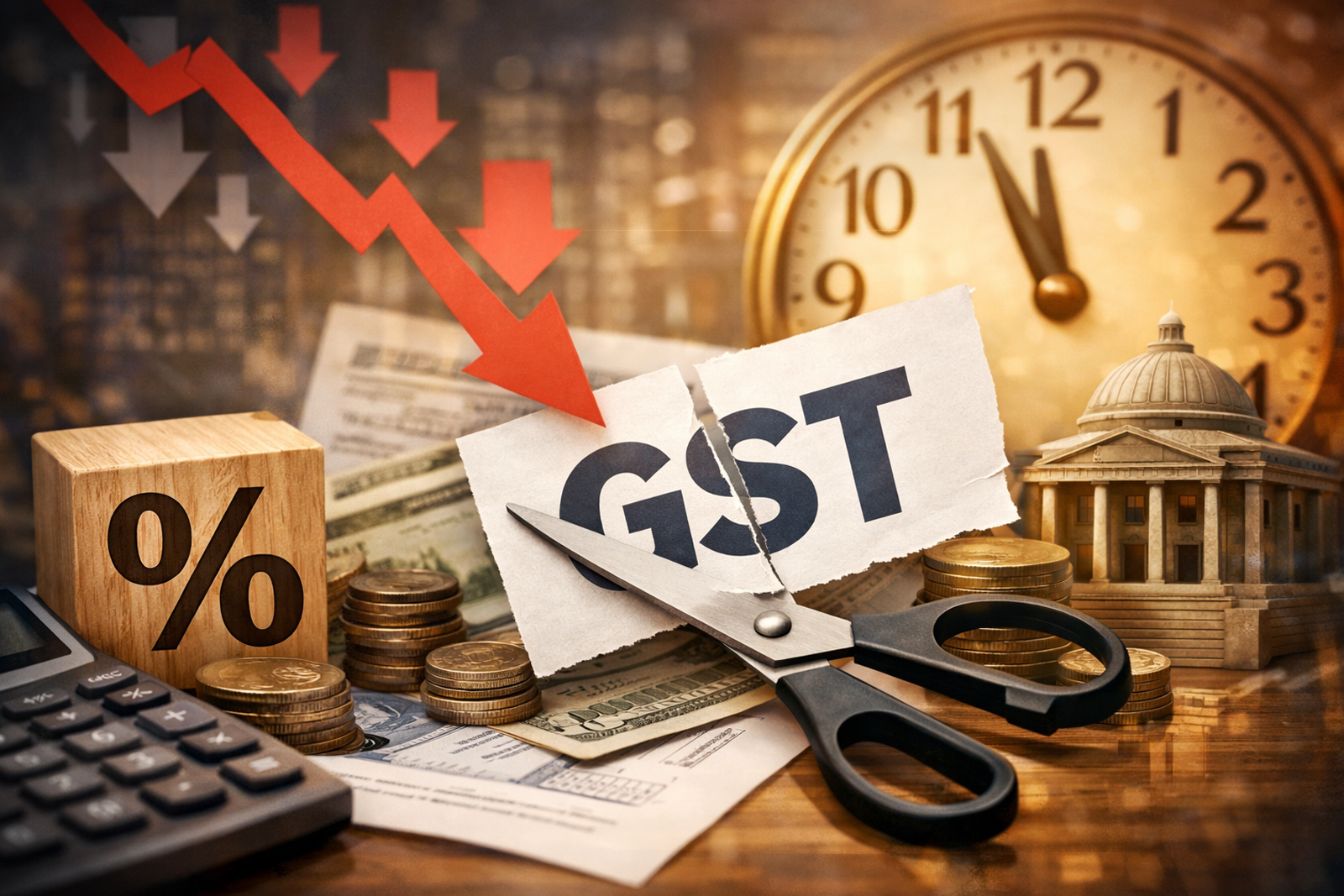
India is set to witness one of the most significant overhauls of its tax structure since GST was first implemented. The GST Council, chaired by Finance Minister Nirmala Sitharaman, announced historic cuts that will take effect from September 22, 2025, streamlining tax slabs and reducing the burden on consumers across the board.
Under the new structure, GST will now operate under just two core slabs—5% and 18%, along with a 40% “sin goods” tax for luxury and harmful products. This marks a departure from the previous complex multi-slab system, aiming to make the regime simpler and more consumer-friendly.
What Gets Cheaper:
Daily essentials including soaps, shampoos, toothpaste, and personal care items will now fall under the 5% slab, ensuring immediate relief to households.
Appliances like ACs, TVs, and small cars, previously taxed higher, will now be levied at 18%, making them more affordable.
Public insurance—both life and health policies—has been exempted from GST, boosting accessibility.
Education and Agriculture Relief:
Stationery items such as notebooks, pencils, and maps will now be tax-free, a welcome change for students and parents struggling with rising educational costs.
For farmers and MSMEs, GST on fertilizers, bicycles, handicrafts, and farming equipment has been reduced to 5%, strengthening rural demand.

Healthcare Impact:
Perhaps the most significant relief comes in healthcare, with 33 life-saving drugs and many commonly used medicines being made GST-free, reducing treatment costs for patients.
Revenue Strategy & Sin Goods:
To balance revenue, products deemed harmful such as tobacco, sugary drinks, and luxury vehicles will now attract a steep 40% GST. Officials clarified that this higher slab is designed to maintain fiscal stability while discouraging excessive consumption of such goods.
Government’s Position:
Calling the reform a “Diwali gift to the people”, Finance Minister Nirmala Sitharaman said the move was aimed at ensuring affordability during the festive season. Union Minister Piyush Goyal hailed it as a “historic simplification” of the tax system, contrasting it with what he called the “complex tax legacy of earlier governments.”
Analysts suggest the reforms will boost demand ahead of Navratri and Diwali, strengthen small businesses, and bring transparency into the indirect tax system. With a wider base of taxpayers and reduced evasion opportunities, the government is confident the new GST structure will be sustainable in the long term.

About The Author
Soojin Das is a dedicated journalist with a strong focus on public affairs, governance, and grassroots reporting. With a passion for uncovering stories that matter, she brings clarity, accuracy, and depth to complex issues shaping communities across India. Her reporting spans politics, social development, education, and local civic concerns, giving readers a balanced and well-researched perspective. Known for her sharp news sense and ethical approach to journalism, Anita combines on-ground reporting with data-driven analysis and compelling storytelling. She has covered major policy announcements, elections, disaster response efforts, and community-led initiatives, ensuring that audiences receive timely and trustworthy information. Anita believes journalism plays a vital role in strengthening democracy and amplifying under-represented voices. Through interviews, investigative pieces, and human-interest stories, she aims to inform, engage, and empower readers. When not in the field, she closely follows media innovation and digital storytelling trends, continually refining her craft to meet the evolving needs of modern newsrooms.
Soojin Das | Journalist


You Might Also Like
-
Centre Urges Responsible LPG Use Amid Supply Concerns The central government has issued an advisory urging citizens to use Liquefied Petroleum ...
-
Indian LPG Carrier Safely Crosses Strait of Hormuz, Easing Supply Concerns An Indian liquefied petroleum gas (LPG) carrier has successfully cro...

Suggested Video